
Introduction
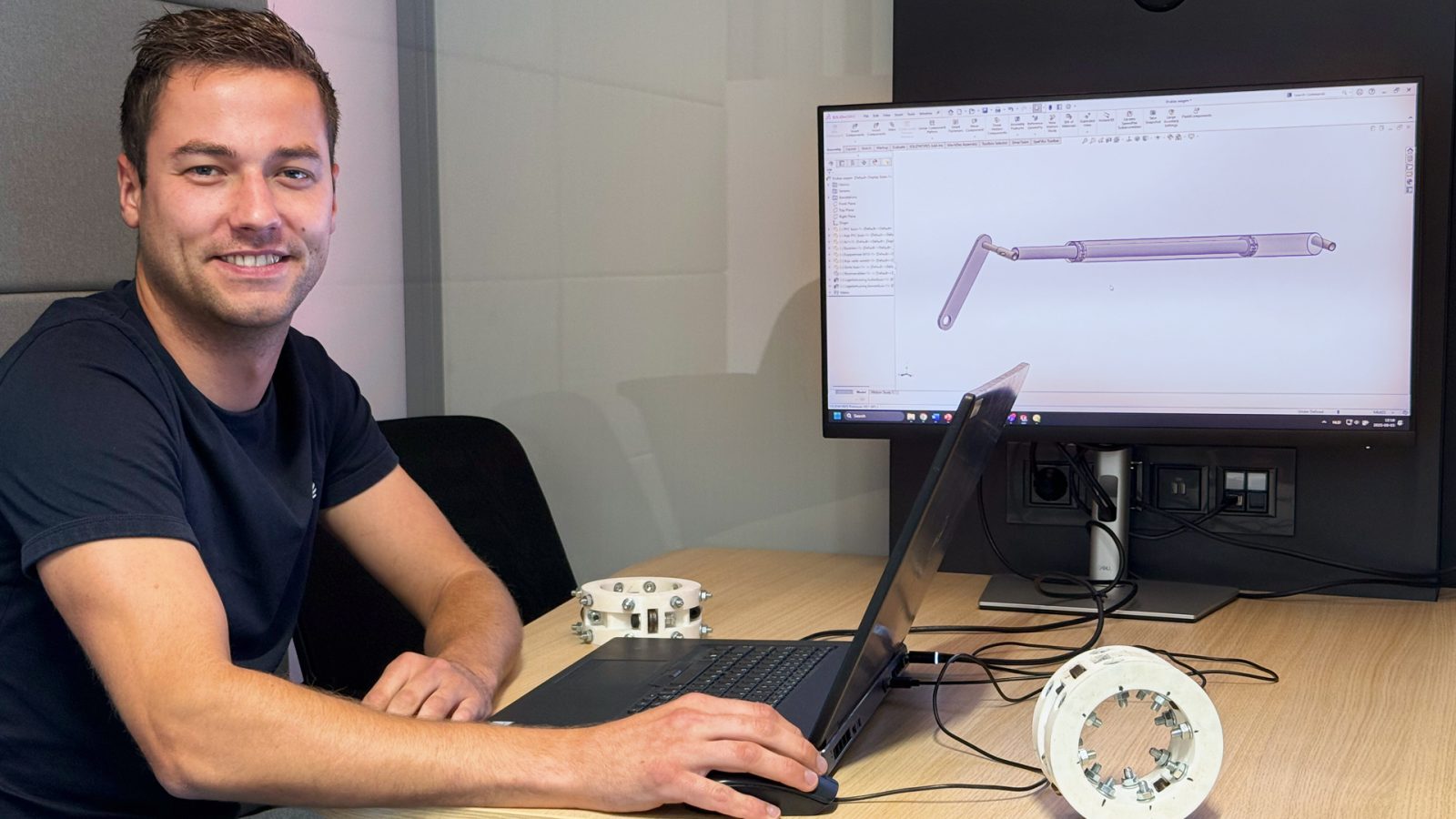
In our Masters of Engineering series, colleagues share their personal projects and passions. Today, Niek talks about his flower parade float in Sint Jansklooster: what starts as a simple sketch is translated by him into a mature technical design in SolidWorks.
Where sketches and practical common sense used to be enough, the use of CAD is increasingly finding its way into the flower parade. The structures even include 3D-printed parts, professional bearings, and a carefully engineered crankshaft, designed with the same care and precision he applies every day as a Mechanical Engineer at MechDes.
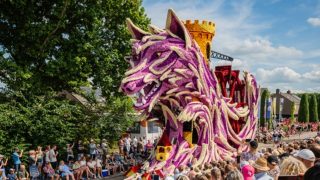
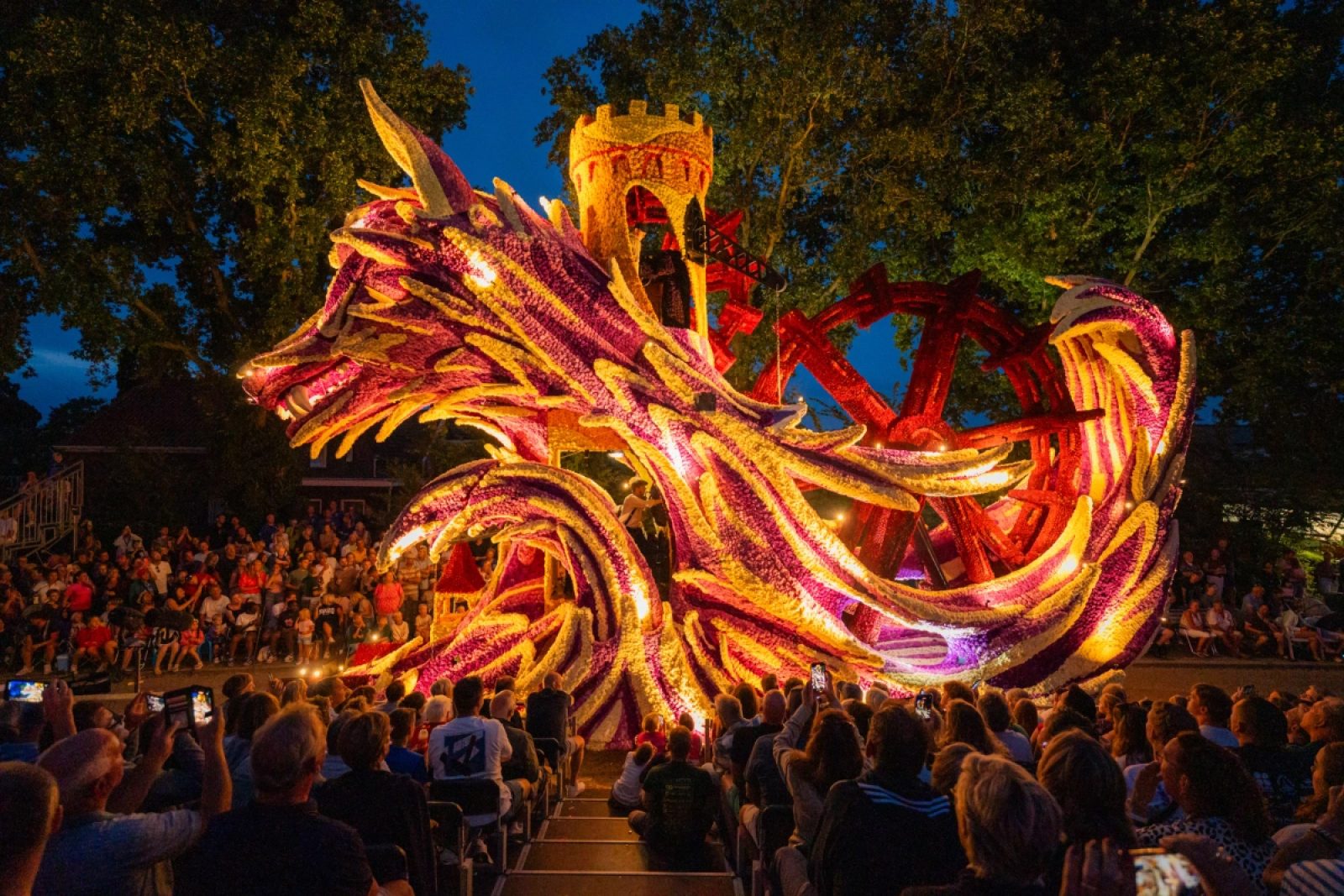
And when you see him standing next to a twenty-ton parade float, beneath a structure towering ten meters into the air, you immediately understand that technology is much more than a profession for Niek. It is a lifestyle. During the day he works on complex engineering projects at MechDes, and in the evenings and throughout the summer months he builds a spectacular flower parade float that he drives through Sint Jansklooster every year during the official Corso Sint Jansklooster in August.
For me, technology is basically one big playground. The best part is figuring out how to make something truly work, whether it is an industrial machine or a ten-meter-high wheel on a parade float. That puzzle, that is what gives me energy.
Building parade floats: the tradition runs deep in his blood
Niek literally grew up among flowers, steel, and welding equipment. From a young age, his parents took him to the construction site, and from that moment it was almost inevitable: he would become part of this tradition as well. As a little boy he glued flowers and pasted newspapers, and at twelve he made his first weld.
"When I look back on it now, that was quite young," he says. "But even then I immediately realized that technology interested me. The sound, the sparks, the realization that you can connect two pieces of steel: I found that magical."
Since then, a lot has changed. Today, Niek is a permanent member of the build team and also carries financial responsibility as treasurer. The build process always starts in December, when the design for the new year is chosen. Then months of work follow: until April it is mainly about planning, preparing, and building scale models; after that, the float rises piece by piece.
Over the course of the summer, the pace increases: several evenings a week, and in August the group operates at full speed. "In the final weeks you practically live on the build site. Sometimes you have to push through, but it is also incredibly beautiful. Especially that feeling that together we are responsible for this mega-machine to drive and shine soon."
High-tech behind the scenes
The image of a parade float is colorful: tens of thousands of dahlias, papier-mâché surfaces, and moving forms that roll through the village streets. But behind that beauty lies a world of engineering. Where the build used to rely mainly on intuition and experience, Niek added a new dimension based on his professional background.
Today, he designs parts of the float in SOLIDWORKS. Moving elements are increasingly worked out in 3D in advance instead of being improvised. He sometimes 3D prints parts at MechDes to test movements or to integrate components directly into the float.
"The wheel with the crankshaft that I designed last year is a good example of that," he says proudly. "It worked perfectly. Even when it accidentally jammed, the structure did not budge: it simply pushed the obstacle aside. That showed that modeling in advance delivers a lot, even though we spend quite a few hours on it in our free time."
Learning together, building together
What makes the parade special, Niek says, is the collaboration. Despite the impressive engineering, everything runs on volunteers and a strong sense of group spirit. Core members are involved all year round, but as the final weeks approach, more people join in.
"In our group of about thirty people, everyone has their own talents," Niek says. "Some are teachers or sales representatives and have no technical experience from their work, but over the years they learn to weld, bend steel, or create complex shapes. Others contribute through, for example, catering, or they apply their organizational skills. It is great to see. Everyone grows, and together you carry responsibility."
Competition and tradition
The parade is also a competition. Every year, twelve build groups compete for jury awards, public votes, and above all the coveted first place.
"Of course we want to win that top prize one day. But at the same time, the process of getting there is at least as valuable. The evenings building together, endless discussions about structures, and then that moment when your idea comes to life and it simply works: that is priceless."
The tradition is deeply rooted in his village. "In the weeks after the parade, every conversation sooner or later turns back to the floats. It is more than a hobby: it is part of the culture, a way of living together."
Innovation through collaboration
The way he builds parade floats and the way he works at MechDes reinforce each other. Where the parade forces improvisation with somewhat limited resources, his work teaches him to think everything through in advance.
At MechDes, we fully engineer something before it is built. In the parade, we often do not have the means to check everything in advance. Then you have to be creative. Together, those worlds ensure that I keep getting better. I take a lot from both.
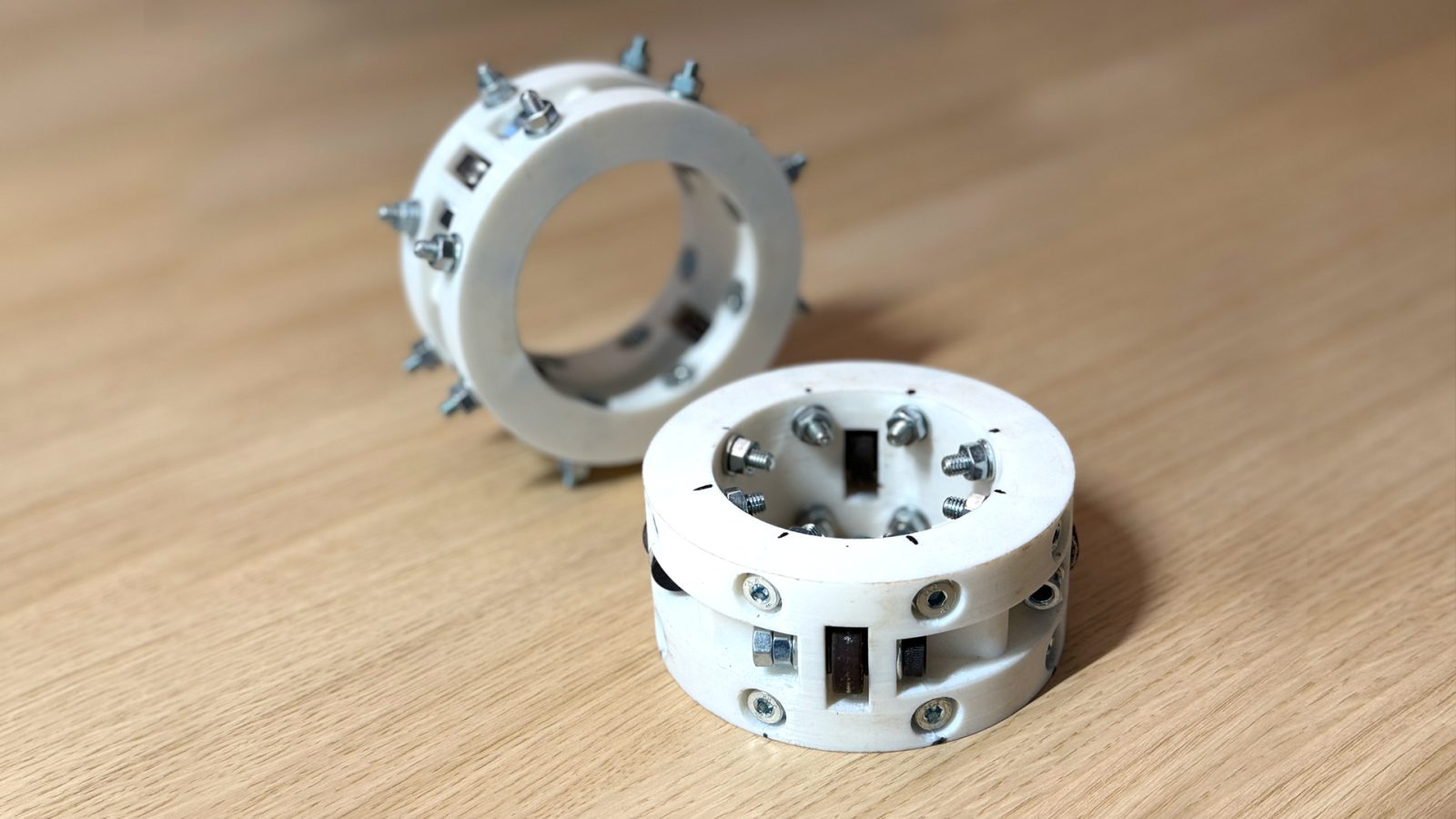
A concrete example is the bearings he applied in the float this year. Where in the past things were often done simply, tube in tube, improvised with whatever was available, the group has been choosing proper bearings for a number of years now.
"That sounds simple," Niek explains, "but it makes a huge difference in smoothness and reliability. Moving parts jam far less quickly, and that translates directly into a better float."
For this technical element, he also involved a colleague from MechDes. "For this I also brought in Sander den Oudsten (Senior Lead Engineer at MechDes Engineering). He provided valuable insights on the correct loading and the position of the bearings, so that the structure would work optimally. It is inspiring to see that knowledge you gain in a professional environment can be translated directly into a volunteer project in the village."
The golden combination
If you see Niek at work on the build site in Sint Jansklooster, you hear the rhythmic sound of welding spatter and watch steel slowly come to life. For Niek, technology and creativity are not separate worlds, but one continuous story: the story of ideas taking shape, of passion translated into tangible solutions.
And perhaps that is his distinctive strength, or as he calls it himself: the golden combination. During the day, he comes up with smart solutions for complex challenges at MechDes, and on weekends he turns that vision into reality, in parade floats that move through the village with thousands of lights.
Whether it is high-tech machines or large-scale works of art, Niek has a passion for technology. That is why we say together with him: We engineer your vision.