
Introduction
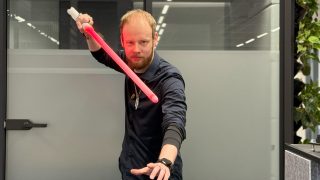
Lightsabers and engineering may seem like two completely different worlds, but for me they are a natural combination. My fascination with building a custom lightsaber of my own started with a simple question: how do I create a saber that not only looks impressive, but is also functional, well-balanced, and durable enough for intensive training? What began as a hobby evolved into a personal testing ground where creativity, engineering, and problem-solving come together.
The process always starts with an idea or sketch, followed by designing in CAD software such as SOLIDWORKS and rapid prototyping. Every component, from the hilt to the LED module, has to fit and function perfectly. Small deviations in material or design can have a major impact on balance and performance. By experimenting with materials like aluminum and PLA, as well as different electronic components, I discover which choices work best. This iterative process of testing, refining, and trying again feels very familiar: it is engineering, but directly experienced through your hands and reflexes.
Where does my love for Star Wars and lightsabers come from?
From a young age, I was captivated by Star Wars. I was just a little boy when I first saw Revenge of the Sith while my father was watching television. That film left a deep impression on me, and since then my love for the Star Wars universe has never faded. Shortly after, I started practicing Hapkido, a Korean martial art that uses sticks and swords among other techniques. That was the moment the connection between martial arts and Star Wars became unmistakable.
After moving and having to look for a new sport or Hapkido school years later, I began exploring other ways to push my limits and become more versatile. During that search, I discovered LudoSport, an official lightsaber combat sport that I had never imagined would even exist in the Netherlands.
Although it has no official link to Star Wars, the parallels in fighting style and mindset are clear. LudoSport is a serious, physically demanding sport where technique, focus, and control are central. While I had already been designing my own lightsabers, this sport gave me the skills to truly handle them. That added an entirely new dimension to both my hobby and the sport.
The Grey Jedi and my own lightsaber
If I were to live in the Star Wars universe, the role of a Grey Jedi would suit me best: someone who seeks balance between light and dark, structure and freedom. It is a philosophy that resonates with me because I enjoy thinking outside conventional paths, always with a sense of balance and responsibility. It keeps me sharp and helps me make choices that are both creative and well considered.
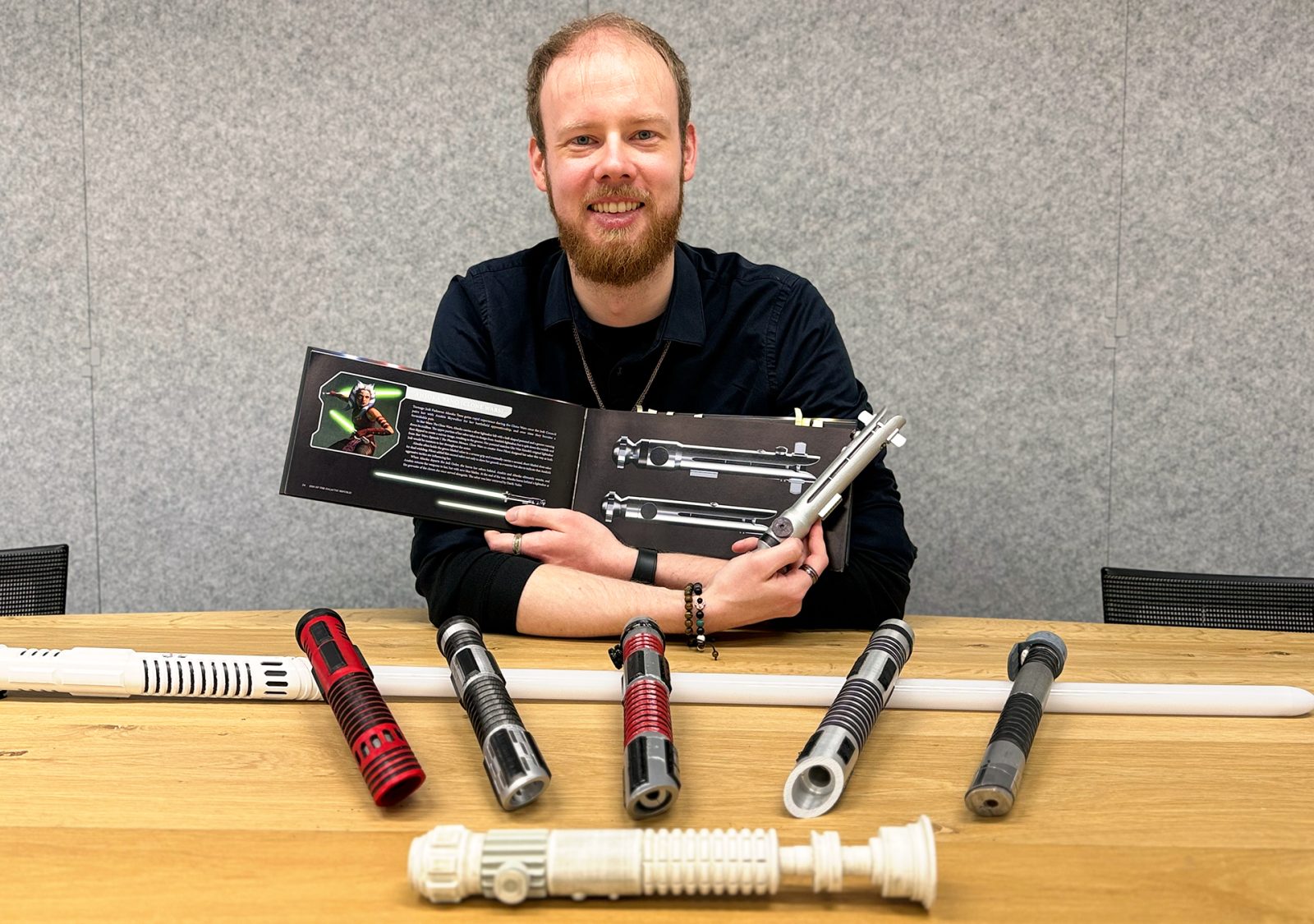
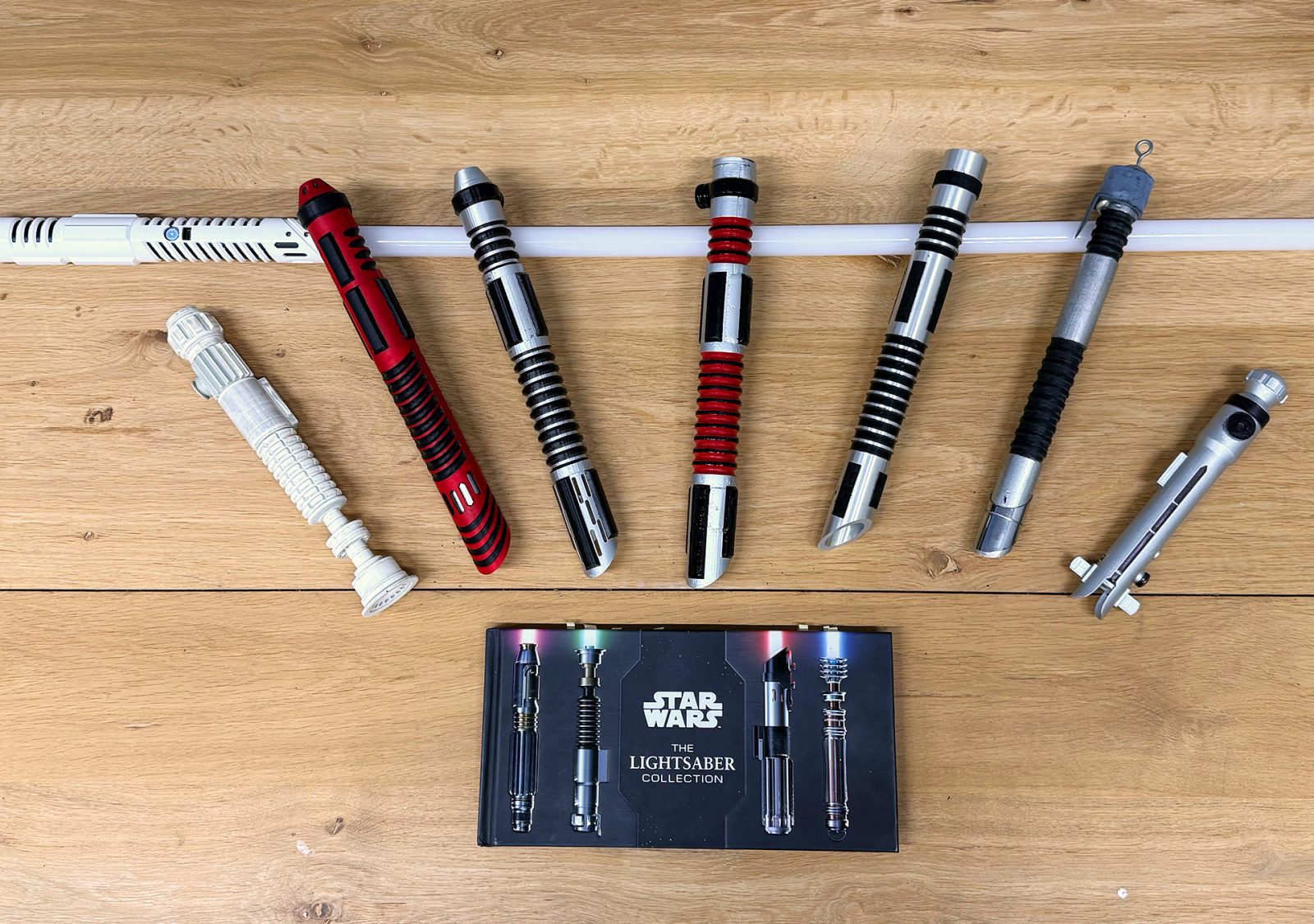
Like any Jedi, the Grey Jedi builds a personal lightsaber, and so did I. It started with a simple wooden hilt to establish the basic shape. Over time, it evolved into a fully custom design with 3D-printed components, integrated LEDs, and a modular system for different training scenarios.
Although my current versions are not yet suitable for full combat training, that is a goal I am working toward: creating a combat-ready lightsaber based on my own design. The challenge lies not only in the technology, but also in achieving the right balance. The saber must feel comfortable, respond predictably, and withstand intensive training.
Each iteration teaches me something new. Sometimes a component is too heavy or not strong enough, so I modify the design and print it again. The electronics must integrate seamlessly with the mechanics, and even small adjustments influence the entire system. This cycle of sketching, testing, refining, and optimizing sharpens my technical insight and problem-solving skills, just like any complex engineering challenge.
From sport to work: discipline and focus
LudoSport, the lightsaber combat sport I practice, teaches me strategy, timing, and control. You must anticipate your opponent’s actions, manage your own movements, and make quick decisions. That level of sharpness and focus supports me both during training and in technical projects.
Training also develops discipline and mental focus. It is not about brute strength, but about technique and timing. Repeating and refining techniques strengthens perseverance, which benefits my daily work as well. The iterative nature of practice, identifying mistakes, and trying again closely resembles refining a design or machine. It is this combination of physical and mental training that sharpens skills and helps me stay creative and structured.
Technology that pushes boundaries
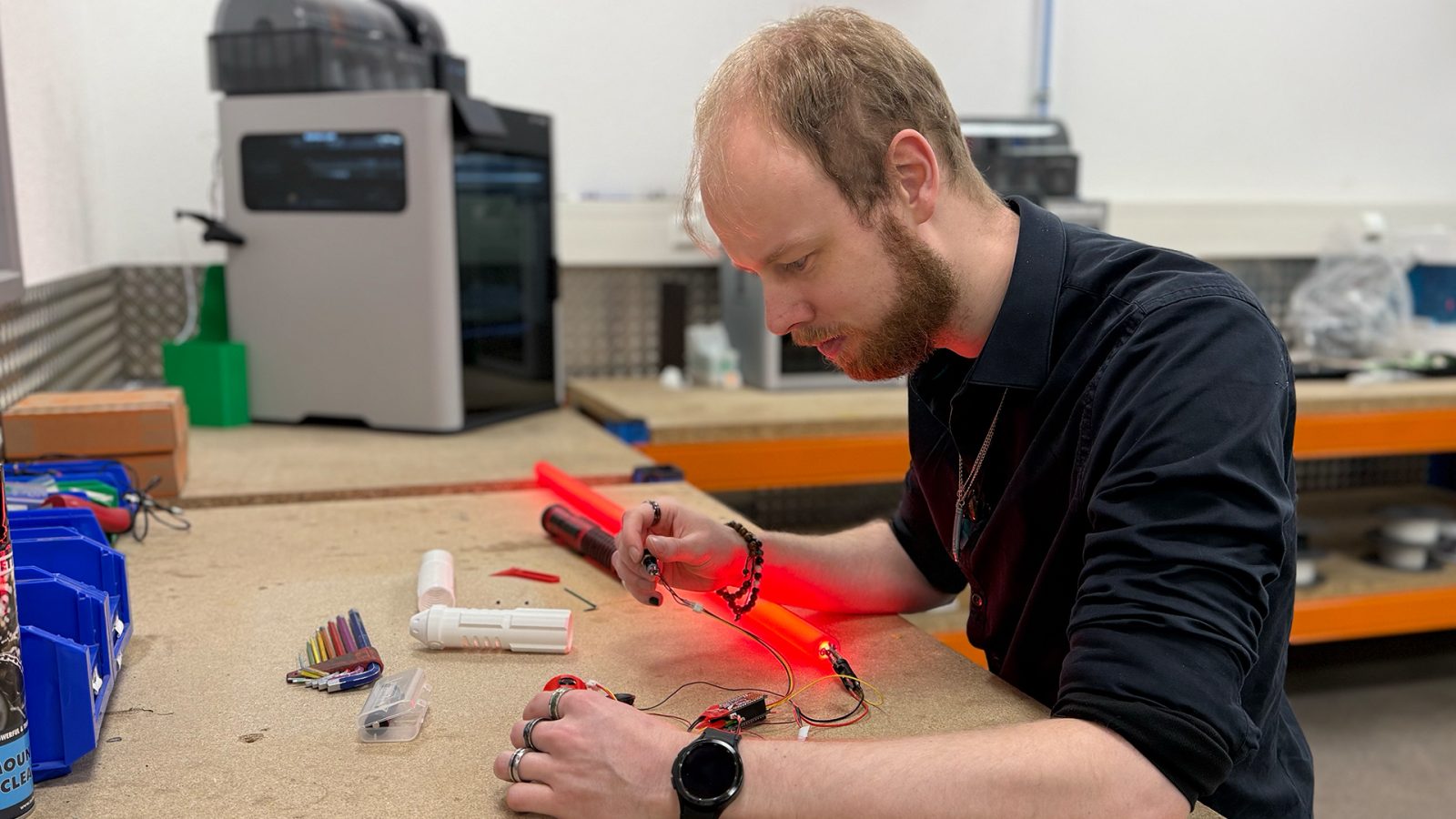
Building custom lightsabers and training in LudoSport has sharpened my technical insight in unexpected ways. Working with 3D-printed components, electronics, and modular design forces me to think beyond traditional frameworks. Materials must be lightweight yet strong, and the system must respond exactly as intended. It is a continuous search for balance, something I also recognize in every complex engineering project.
Analyzing forces and movement during combat provides surprising insights for someone who naturally thinks like a mechanical engineer. How does a component respond to stress? Which geometry enhances stability? What adjustment improves balance without adding weight? Observations like these refine my understanding of detail and material behavior, skills that directly translate to engineering practice.
For me, hobby and work are about balance, focus, and enjoyment
What I appreciate most is how my hobby and profession reinforce each other. Training and building lightsabers are not only an outlet, but also a laboratory for skills I use daily. Planning, precision, attention to detail, and iterative improvement are core principles in both worlds.
Experience with prototypes and material behavior makes it easier to analyze complex technical challenges. Conversely, the structure and discipline from my professional work strengthen my hobby: I design more efficiently, test more systematically, and gain more from each iteration. In this way, I consciously maintain a balance between enjoyment and learning, between hobby and career.
Ultimately, it is all about balance. Between creativity and discipline, enjoyment and results, theory and practice. These hobbies sharpen my analytical skills and attention to detail, helping me view situations from multiple perspectives.
The satisfaction of seeing an idea become reality, whether it is a lightsaber, a complex machine, or an intralogistics solution, remains powerful. The process of designing, testing, refining, and realizing offers a unique combination of challenge and reward.
What’s next for Pascal?
Beyond my own training, I find it incredibly valuable to share knowledge with the younger generation. Next season, I will begin training to become an instructor at LudoSport. I already had the opportunity to lead trial lessons for aspiring members last summer, and it was a fantastic experience. Seeing them progress and become enthusiastic about technique, strategy, and discipline is deeply rewarding.
In addition, I want to further develop my skills as a sabersmith, so I can not only refine my own designs but also support others within the LudoSport community in creating high-quality, safe, and functional lightsabers.
This role as both mentor and maker helps me grow technically and personally, adding another dimension to my passion for the sport and for building. At work, I also see plenty of opportunities to grow. Every six weeks, I review my progress with my team leader. The personal approach at MechDes, where you are genuinely seen as a person, resonates strongly with me. The sense of unity is remarkable. On my birthday, a hundred colleagues sang for me, which truly gives you goosebumps.
To conclude, I would like to end with my personal variation of the company motto: We engineer your vision, and may the Force be with you.