
Introduction
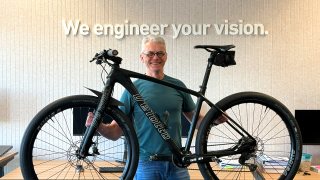
Engineering rarely happens behind a desk for me. The best ideas come when you are right in the middle of something. In my case: on a bike, in the sand, during a beach race. What started as a practical problem evolved into a completely custom system, including self-designed hubs, seals, and controls. In this article, I'll take you through how it all started, which engineering decisions proved to be crucial, and what the project has taught me as an engineer.
A problem you can feel while riding
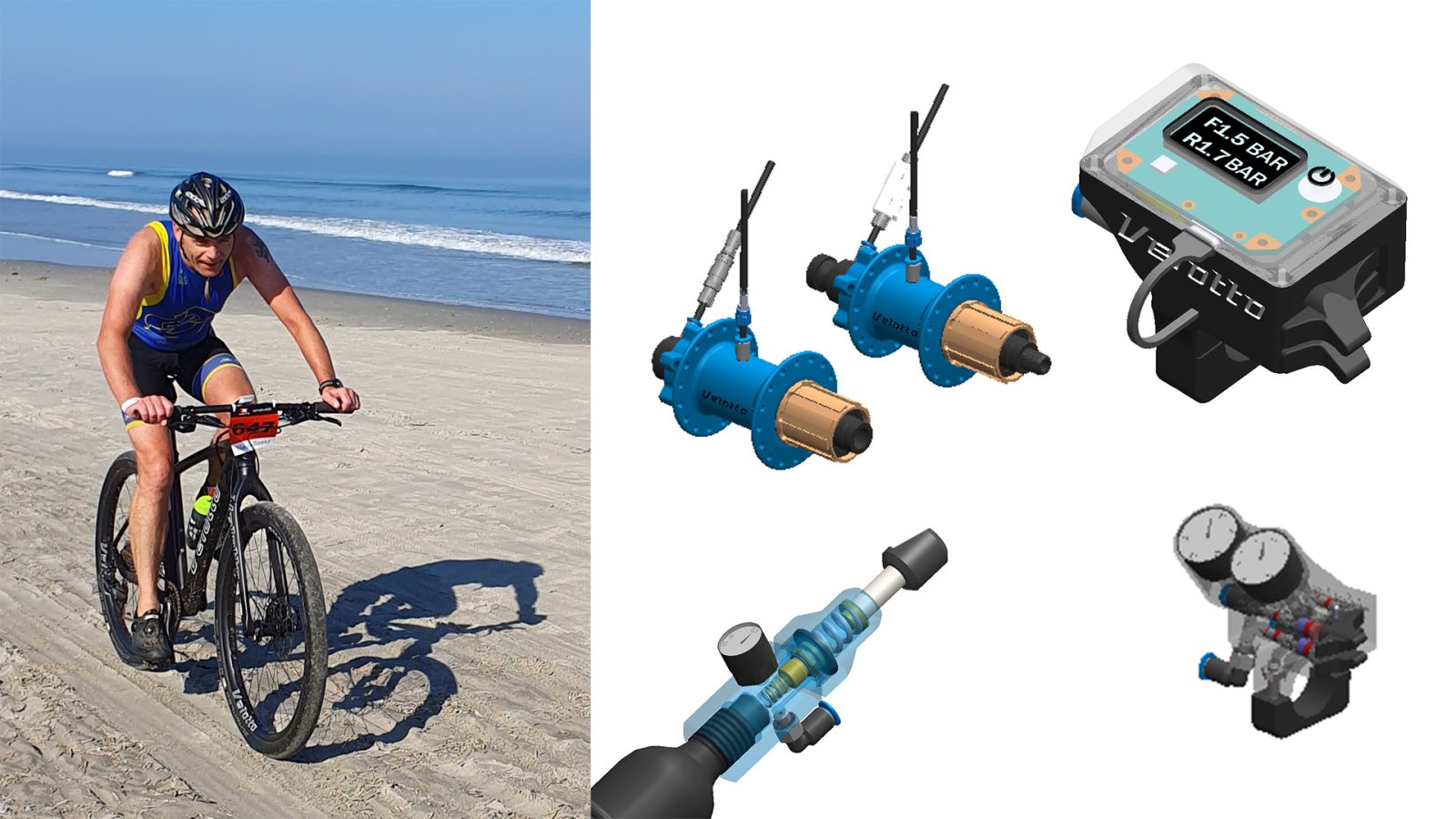
I've been racing beach races with a cycling buddy for years. Anyone who has done one knows just how dynamic the conditions are. You ride over hard-packed sand along the waterline, but also through soft sand, technical dune sections, and stretches where you're constantly making small steering corrections.
Tire pressure is everything in those conditions. On hard-packed sections, you want relatively high pressure. Less rolling resistance, more speed. But as soon as you enter the soft sand, you want the pressure as low as possible for maximum traction and to prevent the bike from sinking in. In practice, that means you're constantly choosing between two less-than-ideal situations. At one point I saw my riding buddy stop to let air out of his tires. That's when I thought: there has to be a better way. Why shouldn't you be able to adjust it while riding?
That was the beginning.
The first attempt: a simple idea, a fast lesson
My first idea was, to be honest, fairly naive. I thought: if I feed air through the axle, I should be able to route it through the hub and into the tire. After all, bearings have seals, so they should be more or less airtight.
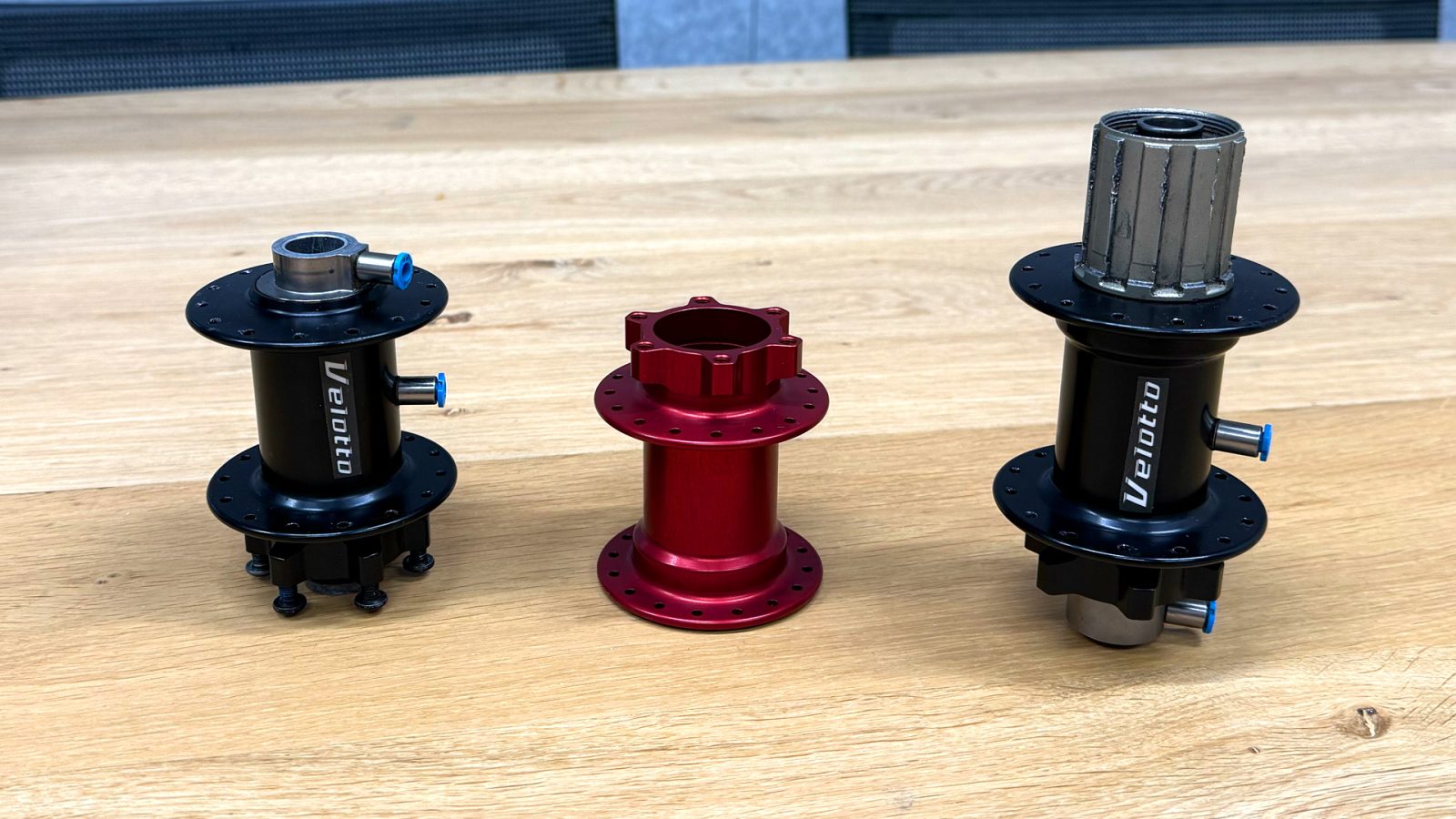
That turned out not to work at all. The reality is that standard bearings simply aren't designed to retain air. The air leaks straight past them. What I was trying to do was force air through a system that was fundamentally never designed for that purpose. But those kinds of early "failures" are incredibly valuable. They immediately show you where the real engineering challenge lies. The breakthrough came when I decided to redesign the foundation itself. I completely redeveloped the hubs in SolidWorks, with one specific objective: controlled air transfer through the axle and hub with virtually no losses.
That immediately puts you in a complex engineering challenge:
- The seals must be completely airtight
- At the same time, they must add virtually no friction
- The bearings must continue to run smoothly
- Everything must withstand dirt, water, and mechanical loads
The first versions with seals worked from a technical standpoint, but they created an enormous amount of resistance. That simply wasn't an option. In a race, you lose power immediately. After many iterations, I developed a sealing solution with a power loss of approximately 4 watts per wheel. That's still a loss, but in practice the system delivers far greater gains than it costs. That's an important lesson: optimization is rarely absolute. It's all about finding the right balance.
The principle: air through the hub with handlebar controls
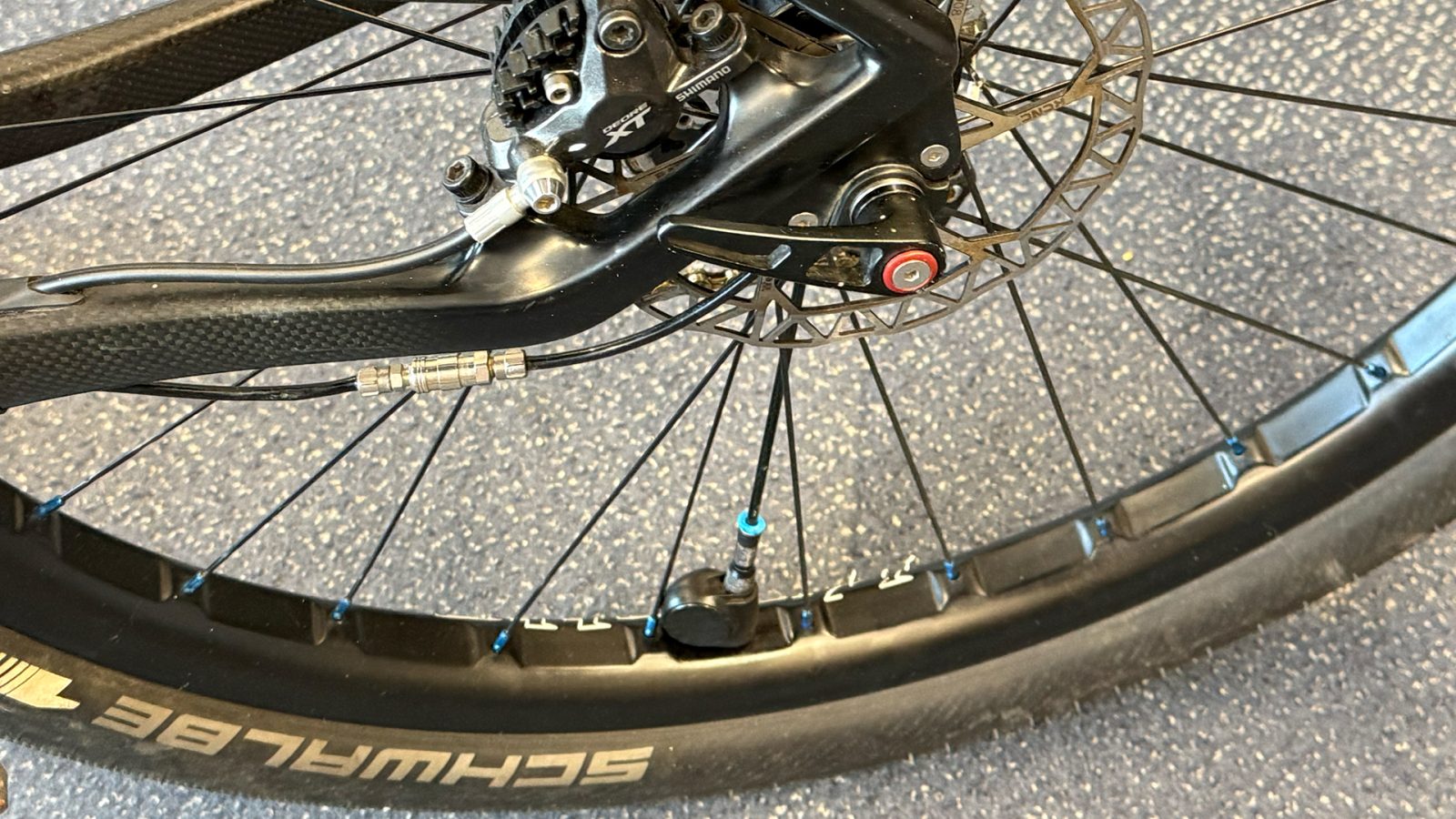
The basic principle of the system is relatively easy to explain, but technically challenging to achieve. I route air from the handlebars through a system of air lines into the axle. From the axle, the air passes through the hub and then through a hose into the tire. This allows me to increase or decrease tire pressure while riding. The real challenge lies in the details:
- How do you prevent air leakage while the wheel is rotating?
- How do you ensure the seals don't create excessive resistance?
- How do you keep the system reliable under all conditions?
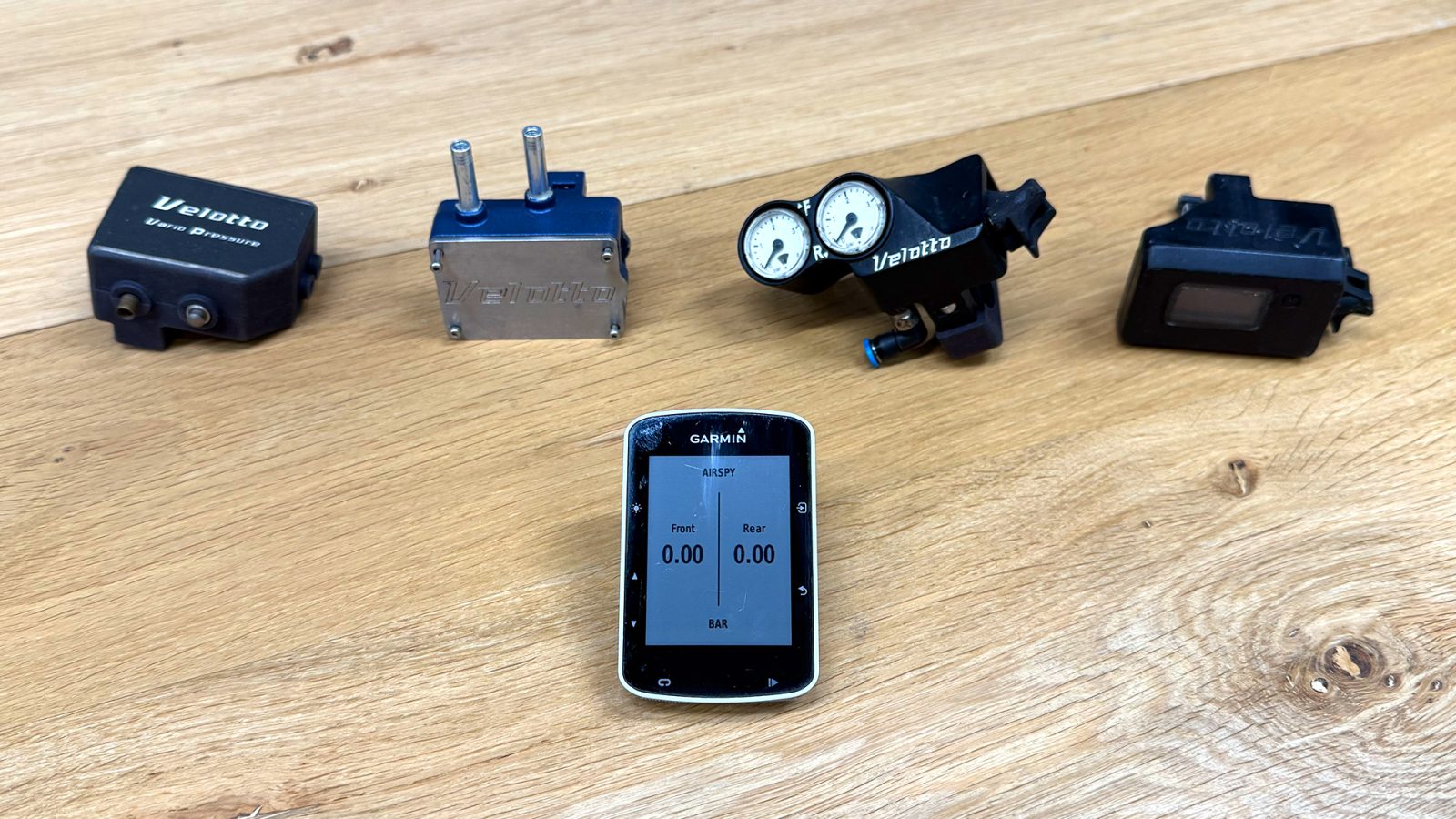
Every small inefficiency is immediately noticeable on the bike. The first version of the controls was far from refined. I had two large pressure gauges mounted on the head tube, along with a set of buttons to control the front and rear tires independently.
The controls for the rear tire were on the left, while the controls for the front tire were on the right. It worked, but it was crude and rather bulky. Still, it was more than sufficient for testing. And that's what matters in the early stages: not perfection, but functional proof of concept.
Testing in practice: beach races as the ideal proving ground
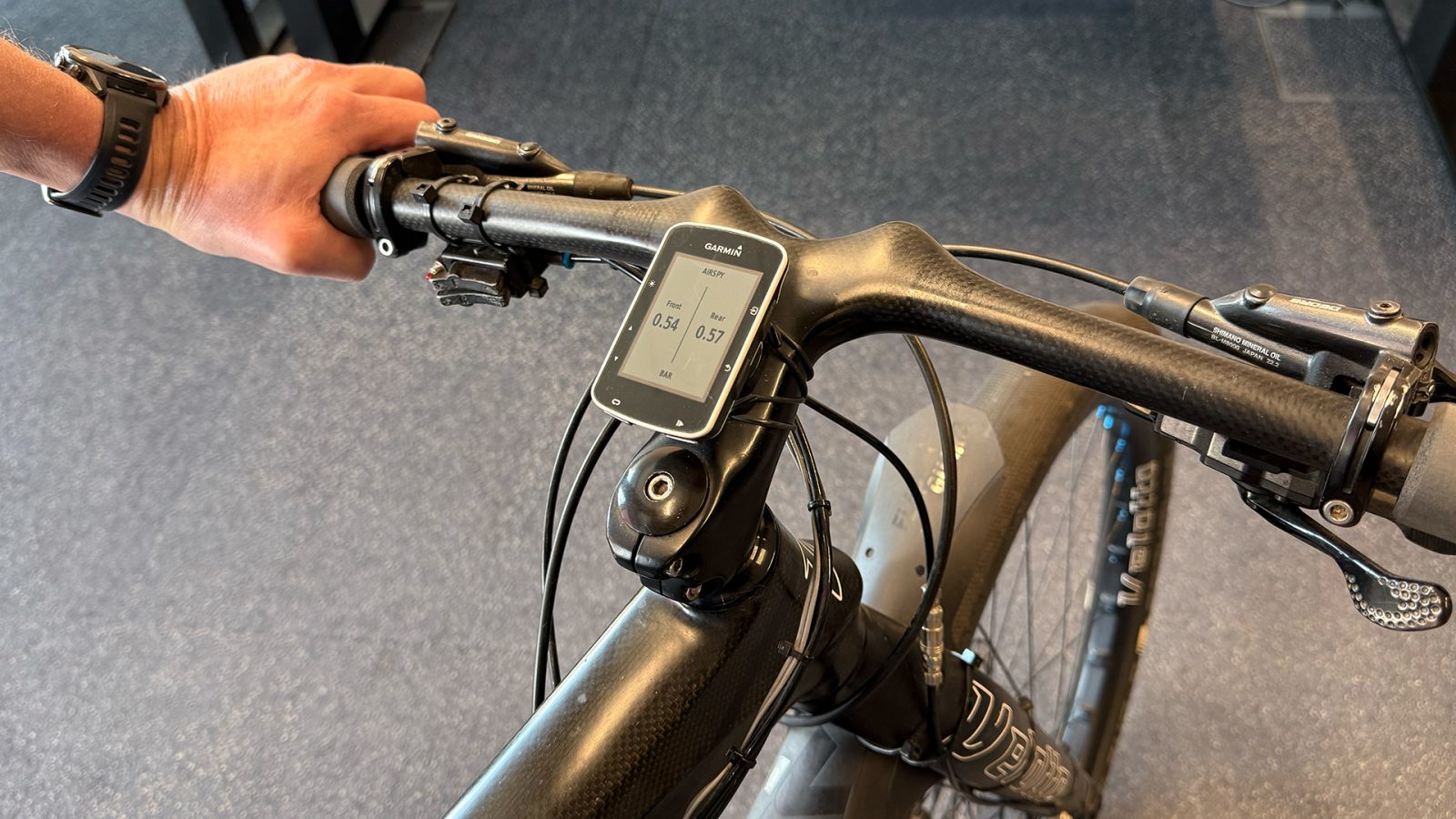
Beach races provide the perfect testing environment. The terrain and loads are constantly changing, making it immediately obvious what works and what doesn't. In soft sand, I lowered the tire pressure to around 0.4 to 0.5 bar. On hard-packed sections, I ran approximately 1 bar. And when it was time to sprint, I could add extra pressure in just 15 seconds for minimal rolling resistance. The biggest advantage is that you no longer have to choose. You continuously adapt your setup to the conditions. You notice the difference immediately in terms of control, speed, and above all, efficiency. You keep riding where others have to correct their line or even get off their bikes.
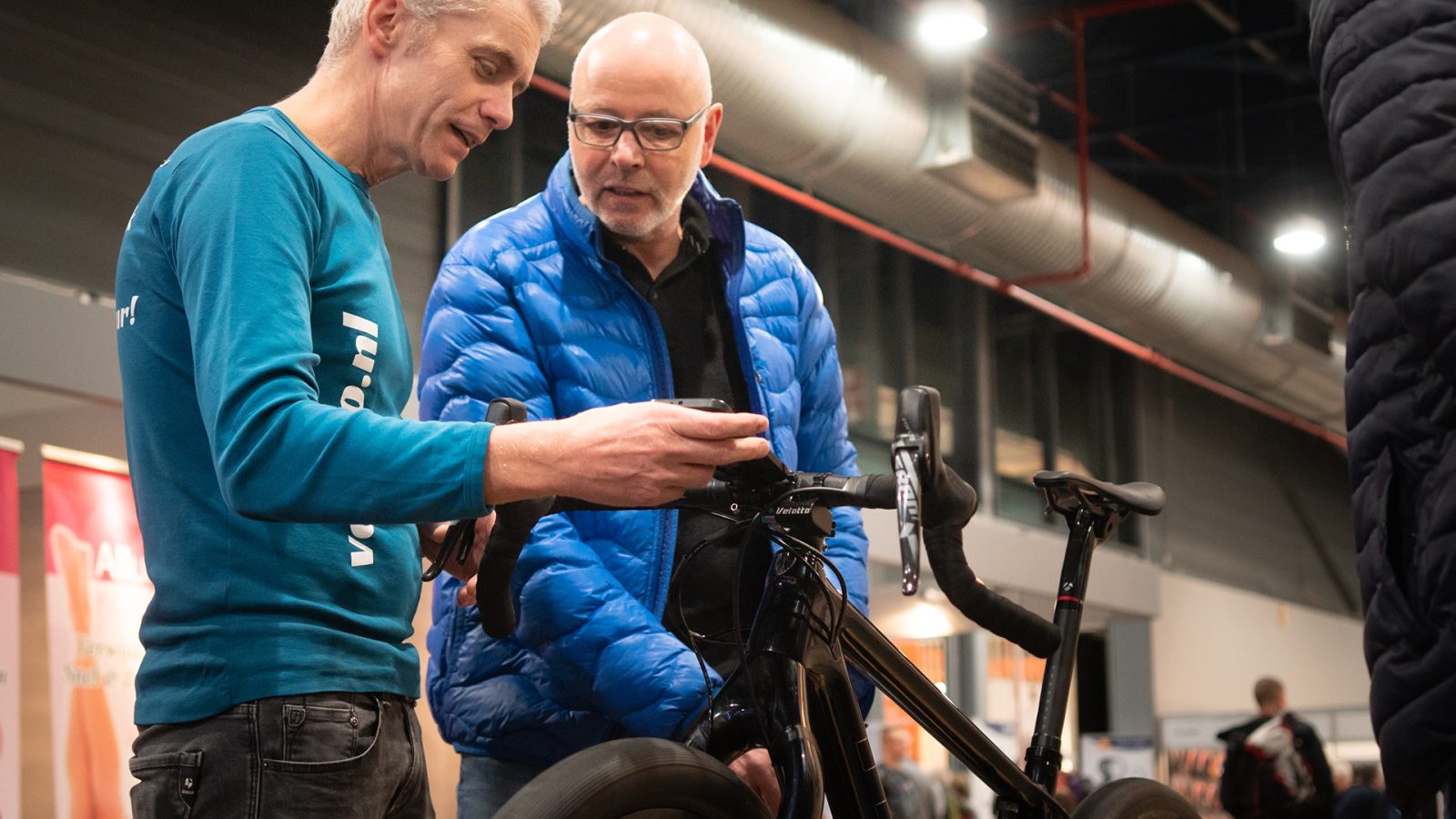
During races, the system quickly attracted attention. When you're standing at the start and you let some air out of your tire without getting off your bike, people start watching. At first, they think you have a flat tire. Then they realize what's actually happening. That led to conversations, growing interest, and eventually my first presentation at a cycling trade show. I received a great deal of positive feedback there, from both recreational cyclists and more professional riders.
Working with a cyclist and obtaining UCI approval
Through this cycling trade show, I came into contact with a semi-professional rider who wanted to use the system. He immediately recognized its potential and also had the network to help take it further. Together, we started the process of submitting the system to the UCI for approval. That was an important step because, without approval, you simply aren't allowed to use it at that level of competition. We received approval and used the system in competition for two seasons. It was incredibly valuable, but also confronting.
During that period, the real weak points became apparent. At the time, we used CO₂ cartridges to inflate the tires. That seemed like the logical choice because of their compact energy storage. However, there was one crucial problem. I had developed my own pressure regulator to control the air pressure. In theory, it worked, but in practice, there were situations where the system continued inflating and didn't stop in time. In a race, that's disastrous. It happened once during an important event, and those are the moments when, as an engineer, you immediately see the impact of a detail that isn't robust enough yet.
Iterating and improving: from CO₂ to pump technology
After that phase, I redesigned the system and switched to compact pumps with a higher capacity. They could move air faster and more consistently, making the system more reliable in use. From a technical perspective, it was a clear step forward. At the same time, however, I was working full-time at MechDes while developing this project during evenings and weekends. At some point, that balance becomes difficult to maintain.
Especially because I had invested a significant amount of my own money into the project. That's perfectly fine when you see it as a passion project and a learning experience, but it also has to remain realistic. The production cost of a wheelset equipped with this system is around €3,000. That includes high-quality components and a lightweight design. From a technical standpoint, that cost is justifiable. The challenge is that the market is relatively small. Many people find the system interesting and would like to use it, but they aren't willing to pay for it. That's a familiar challenge with niche innovations. Eventually, I decided to let go of the commercial side of the project.
Further development: from analog to digital
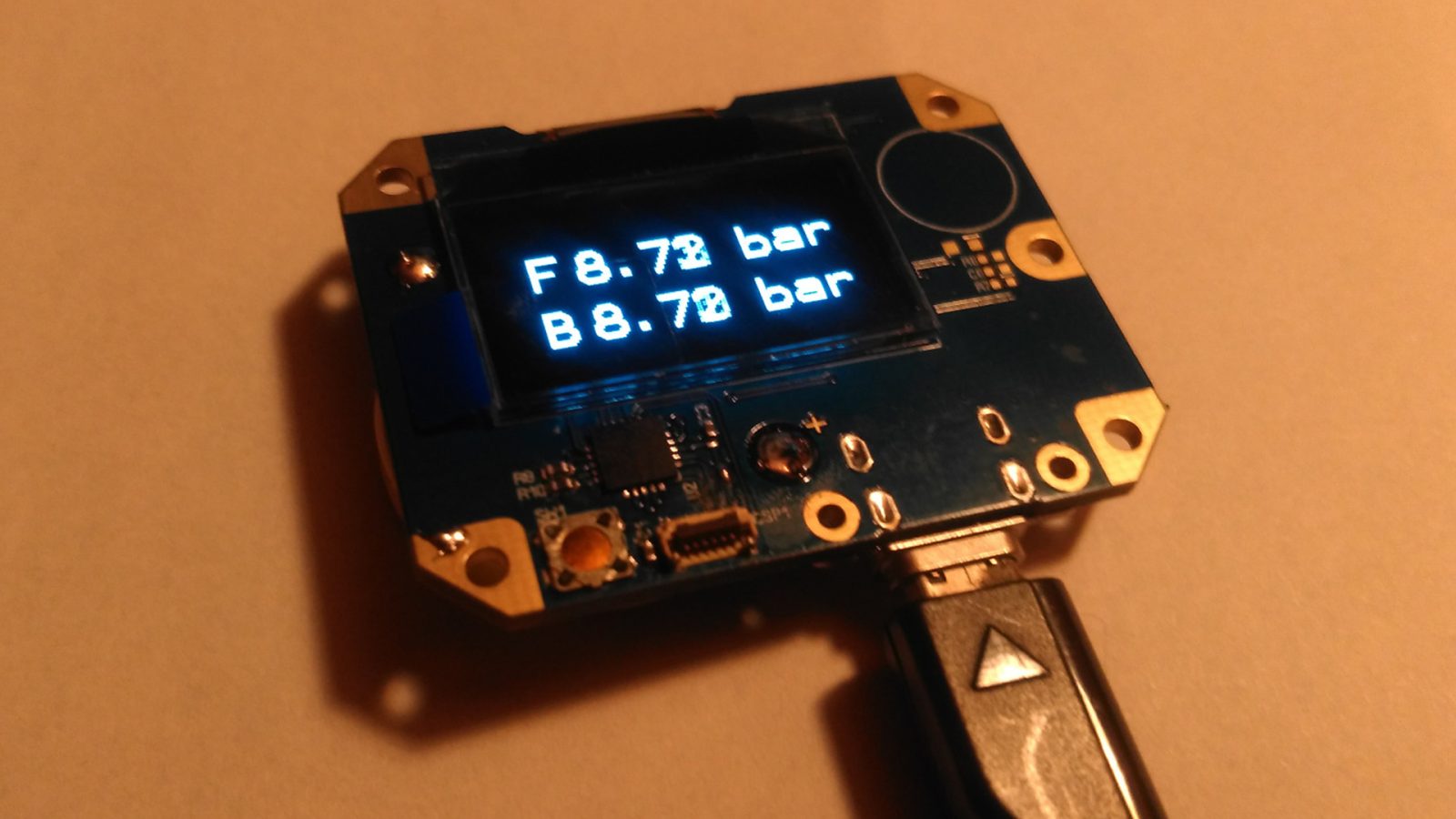
Technically, I continued improving the system. One of the key challenges was accurately reading the tire pressure. You're working within a relatively narrow range of approximately 0.5 to 1 bar. Analog gauges make it difficult to make precise adjustments within that range.
That's why I developed a digital version with my own custom circuit board. It allowed me to read the pressure much more accurately. Later, sensors became available that could transmit tire pressure data directly to a cycling computer, providing even greater insight.
One interesting observation is that you can actually see the tire pressure change while riding as a result of temperature. It's a great example of theory and real-world practice coming together.
The practical advantage: keep riding where others stop
The greatest advantage of the system isn't just speed, it's continuity. You can keep riding in conditions where others have to slow down, adjust, or stop altogether. You always have the optimal tire pressure for that moment. That provides not only a physical advantage but also a mental one. You stay in control.
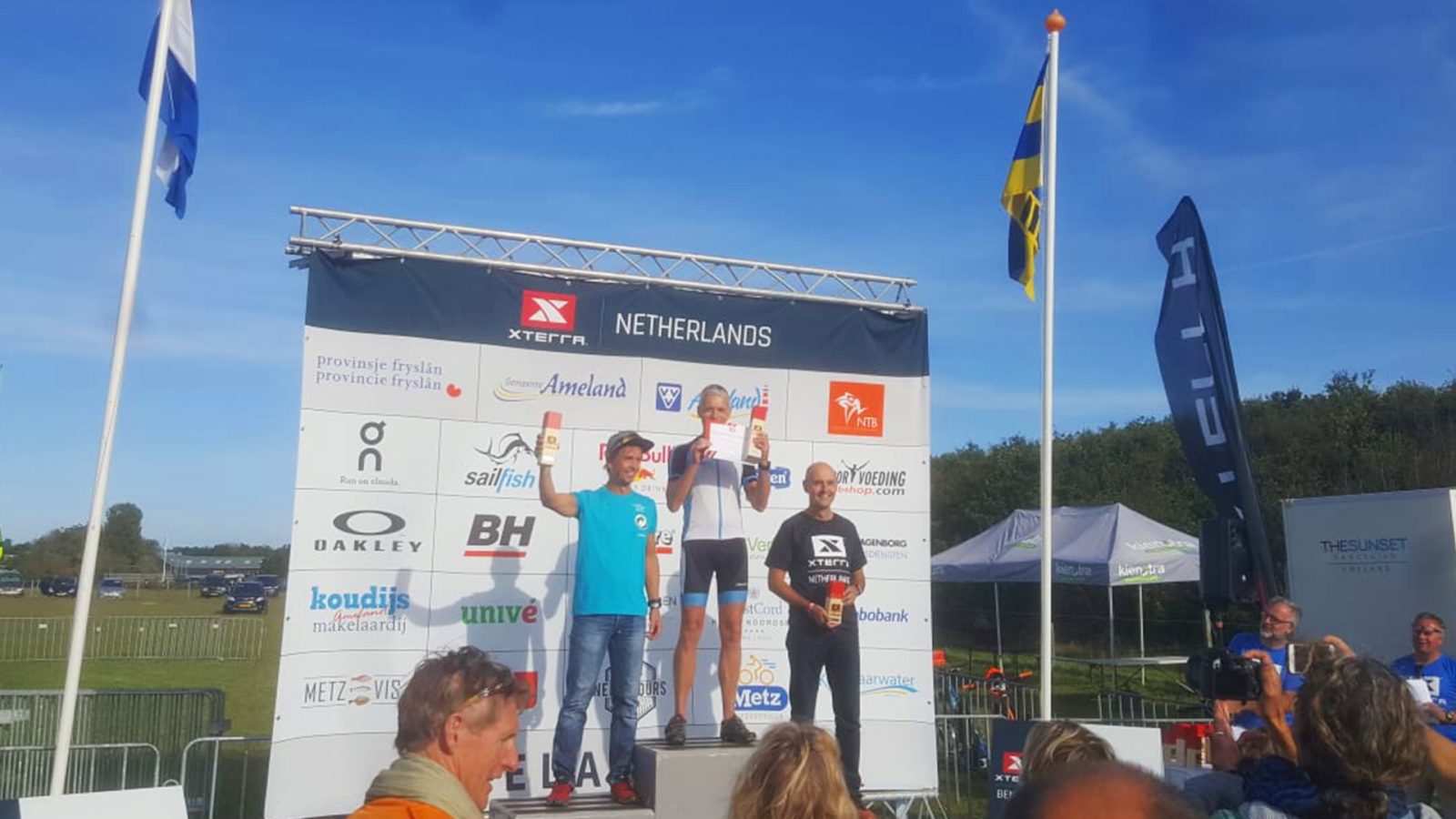
With this system, I qualified for the Off-Road Triathlon World Championship in Hawaii in the Men's 55 to 60 category, thanks in part to the tire pressure system. I also became Dutch Cross Triathlon Champion twice in the same category on Ameland. Even without the system, I've achieved strong results, including two Dutch championship titles in Almere and Renkum. To me, those achievements confirm that the concept works.
The obvious question is: where is this system truly relevant? It's ideal for beach racing. I also see clear applications for gravel riding, where you encounter similar variations in terrain. For traditional road cycling, it's less relevant. There, the focus is on consistent conditions and maximum efficiency. Regulations also play a major role. In some disciplines, there is very little room for innovations like this.
What this project has taught me as an engineer
Looking back, I realize just how much this project has contributed to my work as an engineer:
- It constantly forces you to connect theory with real-world practice
- It develops your intuition for what is truly critical in a design
- Without a solid business case, scaling successfully remains difficult
- Close integration between hardware and software is essential
At MechDes, we work on complex engineering challenges every day. Personal projects like this sharpen your technical insight and help you grow into a more complete engineer. To me, Velotto has never been just a product. It's a way to keep learning, test new ideas, and make engineering tangible.
It shows that innovation doesn't always start with a grand vision. More often, it begins with a simple question: Couldn't this be done smarter? For me, it started on the beach, with sand in my shoes and an idea I couldn't let go of. And in the end, that's what engineering is all about.
About MechDes Engineering
MechDes Engineering is a mechanical engineering consultancy with more than 30 years of experience in developing innovative and practical solutions for complex engineering challenges. MechDes works closely with its clients, from the initial concept through realization and optimization.
The strength of MechDes lies in the combination of thorough engineering, creativity, and close collaboration. By focusing on the essence of every engineering challenge while maintaining a clear view of the bigger picture, the team develops solutions that are not only technically sound but also make a real difference in practice.
With a team of dedicated engineers, MechDes works on projects across a wide range of industries every day, where innovation and manufacturability go hand in hand. That same mindset is reflected in the personal projects of its engineers, where curiosity and craftsmanship come together and directly contribute to their growth as engineering professionals.