
Introduction
After working as an engineer for more than ten years, I made the transition to team leader. I carry that background with me every day in the way I guide new colleagues. One of the experiences that has always stayed with me took place in China. There, together with colleagues who also showed intrinsic motivation for this trajectory, I had the opportunity to train engineers from our parent company for six weeks on a rotating basis.
There I learned something important: placing someone directly into a project simply does not work. You do not discover our way of working by just joining in. You first have to practice consciously. That is why I set up an onboarding program: starting with instructions, then practicing in 2D, and only later creating concepts independently in 3D. This gave people the opportunity to truly understand, step by step, how we design and make decisions.
I later successfully rolled out this program within MechDes, after convincing our then Operations Manager with my learnings and an advisory plan. We now have an onboarding program of three to four weeks in which new colleagues are gradually introduced to our methods. It forms a solid foundation that enables young engineers to work independently and with greater confidence more quickly.
My management style: direct and involved
I know that I can be extroverted, direct, and sometimes black and white. That does not work the same way for everyone. For me, the strength lies in that clarity, but I have to remain alert that it does not become a pitfall. For example, in discussions where I remain too firm. Feedback from my team has helped me sharpen myself in that respect.
I have fixed, but also spontaneous moments when I talk with my team members about work, personal matters, or simply light topics. It is precisely in those conversations that you often hear the small signals that matter: hints that something is going on or that someone is struggling with something. By consciously listening and asking further questions, a real connection is created.
Leading engineers requires more than technical knowledge alone. Our people are often strong in content, but sometimes introverted by nature. That requires listening carefully, asking open questions, and actively seeking connection, also during spontaneous moments such as a coffee break or a short meeting. My most important tip for guiding introverted colleagues is: listen without filling in the blanks. Ask open questions, check whether they feel comfortable with your approach, and adjust your style where necessary.
Not everyone responds the same way to my direct style, so by consciously asking about it, you discover what truly works for each person. In that way, an (introverted) colleague can grow in confidence, and at the same time a stronger team dynamic is created.
Growing in leadership in a way that suits you and your team
When finding the balance between letting go and providing direction, listening well is also crucial. You can often see whether someone can grow independently or whether additional support is needed. I pick up signals through multiple channels: colleagues, project leaders, or other managers. At the same time, I personally check in with that person. If necessary, I provide guidance or offer help, but I also leave room where possible, so that someone can learn and grow independently.
Listening well, making no assumptions, and adjusting my filter to the person in front of me have been important development points for me. And honestly, they still are. The difference is that I am now much more aware of them, which allows me to actively pay attention and continue growing in my leadership.
In addition, I strongly believe in the importance of personal attention and thoughtfulness. For me, thoughtfulness lies in small but meaningful gestures: putting up decorations for a birthday, giving a small gift for an anniversary, or taking a moment to acknowledge a special event in someone’s personal life. These are the details that show you truly see and appreciate people. For me, that is just as much a part of leadership as providing direction or coaching.
Ownership: more than just responsibility
Development is never the responsibility of just one person. As team leaders, it is our task to clearly understand the ambitions of our people and place them on the right projects, in consultation with other team leaders. In this way, we ensure that personal ambitions also contribute to the goals of MechDes.
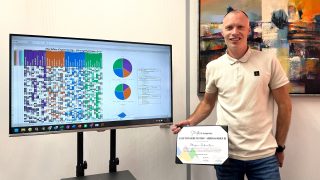
We also make use of tools such as the Gallup StrengthsFinder (via StrengthsCompany) and training sessions by Guido Geenen, which help people get to know themselves better and work from their strengths. Ultimately, the principle applies: happy employees who continue to develop enable us as a company to take on more challenging work and serve our clients better.
With the insights from the StrengthsFinder, we have a clear view of the qualities of our engineers. This allows us to align team composition per project even better with the specific challenge. We derive these valuable insights from an internal tool that was specially developed for this purpose by my fellow team leader Gerard Meerens.
What gives me the most energy is when people take control of their own development. We call this ownership. With young, motivated starters, you often see this happen naturally: they quickly take on tasks and want to prove what they are capable of. These are the high potentials: they grow rapidly, and my role is mainly to support and provide direction.
Others develop at a more gradual pace. That is just as valuable. They sometimes come to me with the question: "What do I need to do to take the next step?" Then we create a concrete plan together, so that it becomes clear which steps are required.
Taking responsibility goes beyond simply doing your job well. It also concerns small things: turning on the dishwasher before you go home so that everyone has a clean cup the next day. Or supporting a colleague during a difficult moment. It lies in making choices that are valuable not only for yourself, but also for the team.
Learning together and sharing responsibility
What makes MechDes special is that ownership is not only an individual theme, but something we carry as a team and as an organization. We often work on complex projects that involve multiple disciplines. That requires close collaboration, but also that everyone takes responsibility. Only then does the whole come together properly.
For us, ownership does not mean doing everything alone. On the contrary, collaboration with colleagues is essential. It is about taking control yourself and actively seeking connection with others. You dare to ask questions, give and receive feedback, and are willing to take an extra step when the team requires it. It is precisely in that collaboration that growth takes place, both for yourself and for the organization.
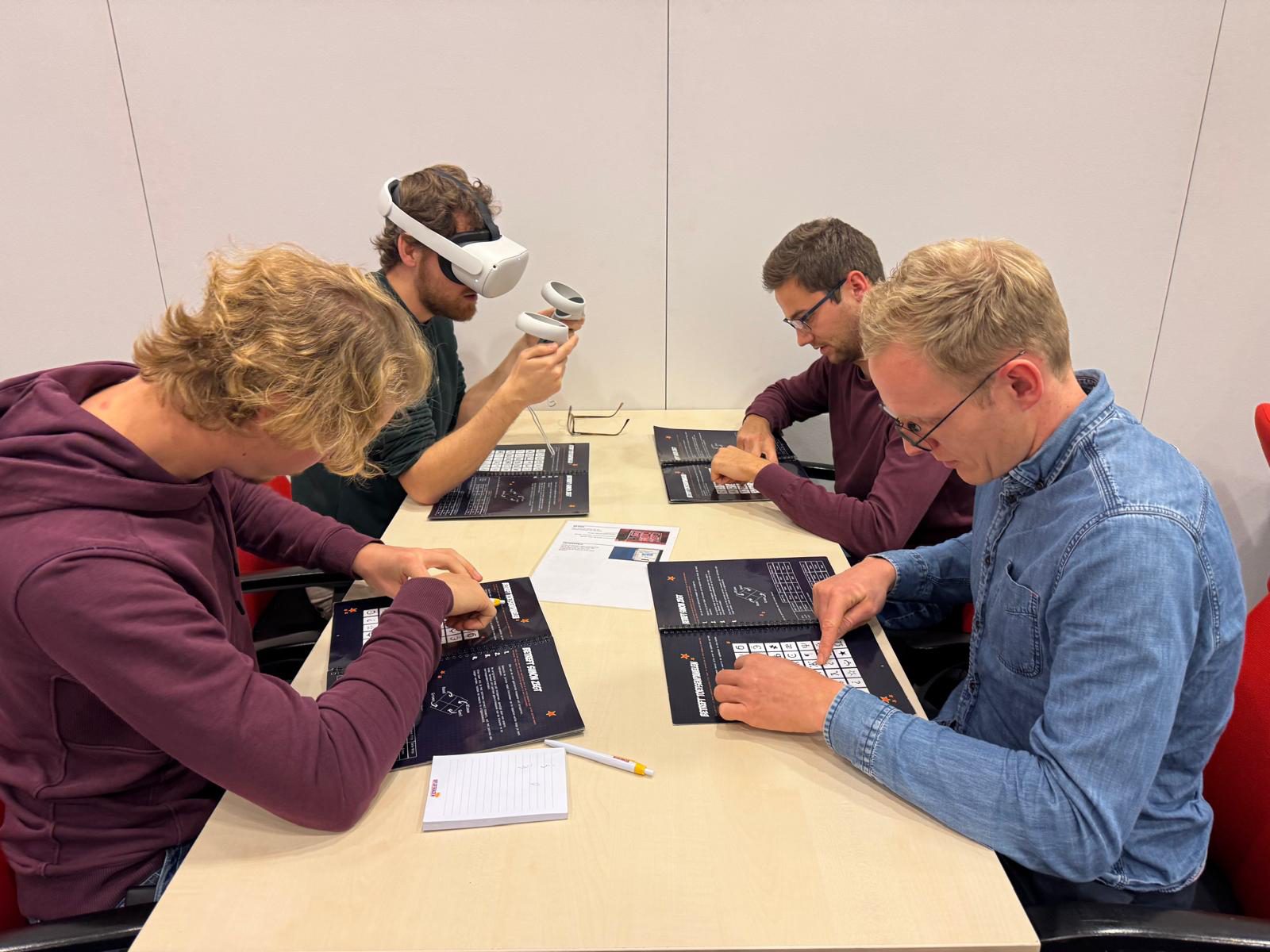
To strengthen this connection within my team, I organize a team outing a few times a year. This combines work-related activities with a touch of social interaction. During the most recent outing, a VR activity was central: in small groups, colleagues learned to collaborate and communicate in order to defuse digital bombs.
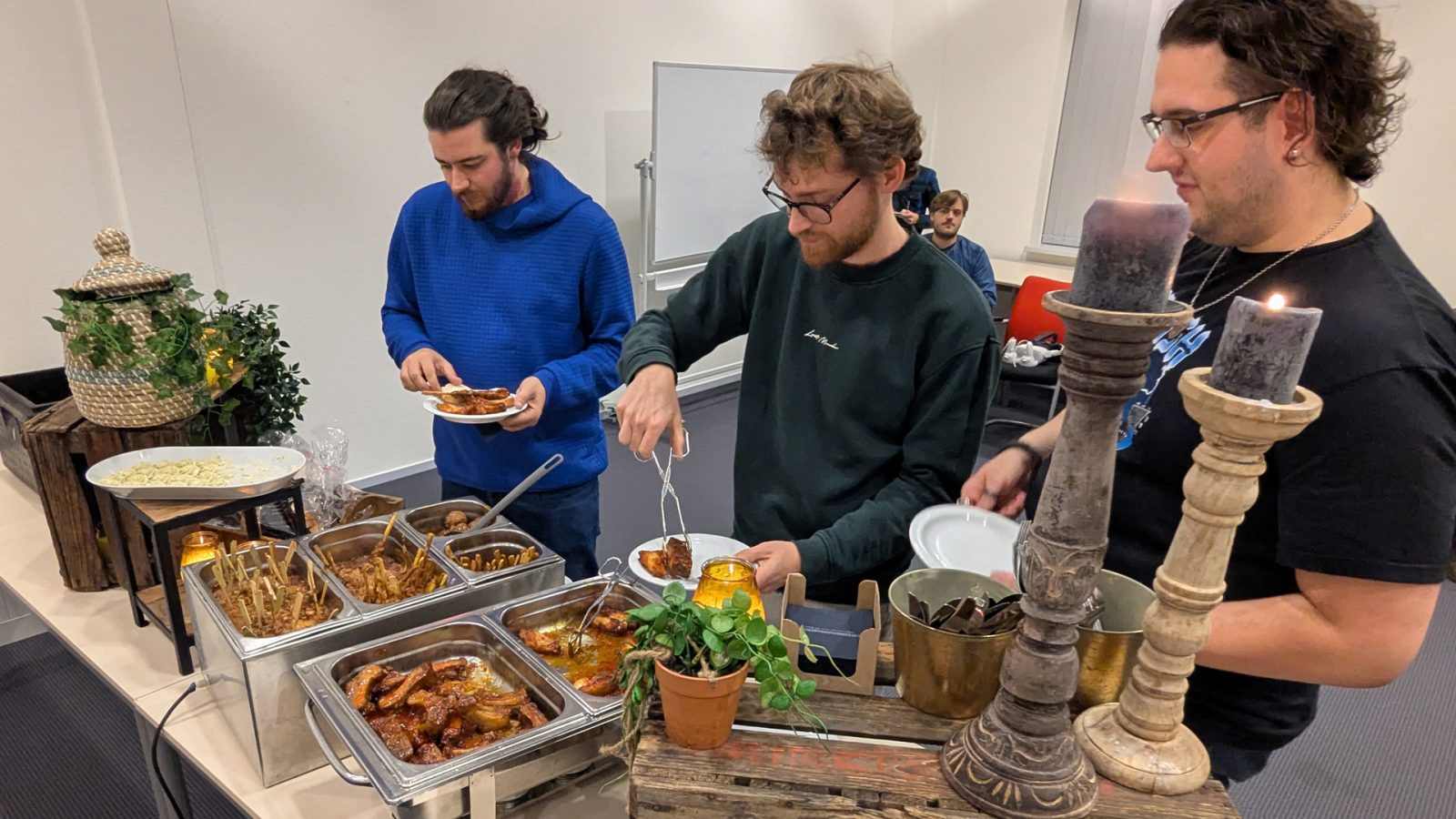
Afterwards, they could individually experience various VR games. The outing concluded with food and a board game, creating space for informal conversation. This combination of learning, collaborating, and relaxing ensures a strong team spirit while also offering the opportunity to share valuable experiences.
Do not change your style, but be aware of your impact on others
What I have learned is this: you do not need to change your style, but you do need to be aware of the effect you have on others. Ultimately, leadership is about creating connection, giving space, and at the same time providing direction.
For me, leadership is therefore not about making all the decisions, but about creating an environment in which people take ownership of their work and their development. Because that is what moves a team, and ultimately an organization, forward: people who share responsibility and grow within it.
And that is why I enjoy working at MechDes: here I can continue to develop myself, help my team grow, and achieve great results together.
Working at MechDes
At MechDes, you work in an environment where you can make your own choices, take responsibility, and actively think along about how projects and processes can be improved. We believe that people who take ownership of their work and development grow the most and contribute the most to the team.
That is why we are looking for people who are curious, gain energy from responsibility, and enjoy achieving results together. Someone who does not wait, but actively wants to make a difference.