
Introduction
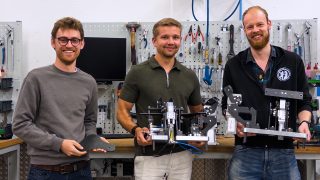
In engineering, everything revolves around finding the right balance between design and production. At MechDes, we take manufacturability seriously, because a design is only truly good if it is not only technically correct, but can also be produced efficiently and reliably. Over the past year, we took additional steps in this by following the manufacturability training at Mikrocentrum with a number of colleagues. This training is intended to expand our knowledge of production processes and to show how small design choices can have major consequences for the chain.
From drawing to production: learning from practice
During the training, we were able to discuss a lot of our own work and received feedback from professionals. This gave us insight into how we can optimize designs to make the production process in the next steps of the chain easier. Sometimes a seemingly simple part turns out to be surprisingly complex, while a complex part, with the right tools and indications, turns out to be easy to produce.
One of the lessons that is directly applicable came during a visit to the milling shop. There we discovered that sometimes it is better to draw a radius slightly larger because of the standard sizes of milling cutters, in order to make machining easier and more efficient. Practical insights like these show how a small detail in a design, and ultimately in a drawing, can have a major impact on manufacturability.
Discussing with the builders on the shop floor: applying knowledge directly
At MechDes, we believe the best designs arise when engineers closely collaborate with the people who actually make the parts. Jelmer says:
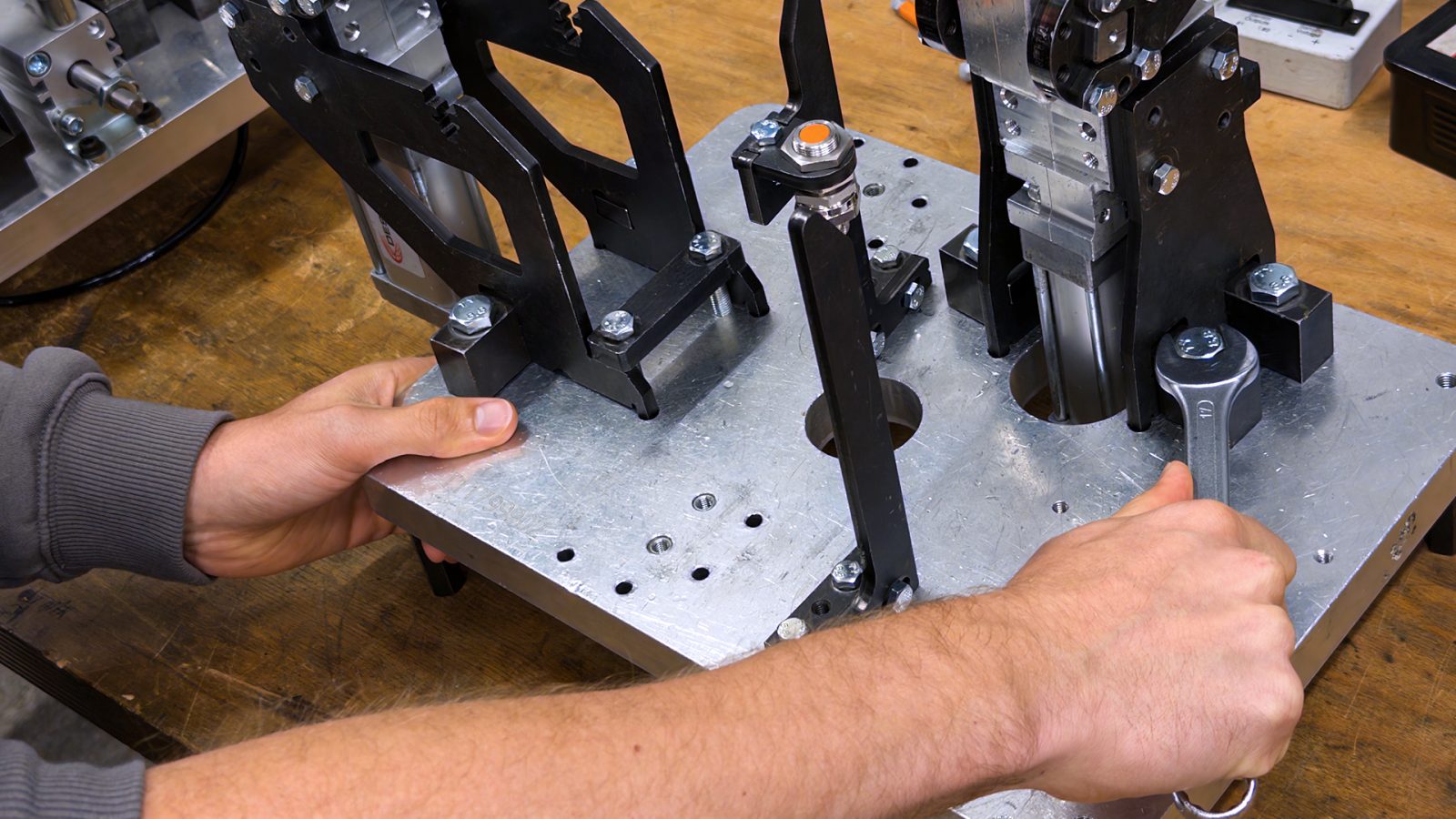
During the development process of the molds, I like to walk over to one of the milling shop employees to discuss parts that may be complex. Their experience helps me understand how I can design the mold more intelligently.
Millers often first make a small fixture to be able to manufacture a complex part, because otherwise it is difficult to clamp. By taking this into account, we as engineers can design our parts in such a way that production runs more smoothly. The same principle also applies to welded structures, Pascal says:
For complex welded assemblies, I go to the welders to discuss. During welding there is a higher chance of deformation, so it is important to know how certain things should be shown on the workshop drawing.
This direct collaboration with production professionals not only makes our designs more workable, but also creates a continuous learning process. In this way, we learn how small adjustments in a drawing can prevent major problems in practice.
Insight into the chain: from design to assembly
Another valuable moment was a recent trip to the Czech Republic, where Jelmer and colleague Guus, Support Engineer, saw various molds in production. From the perspective of assembly, it became clear how small design choices can have major consequences. What looks simple on a screen can cause issues during assembly that lead to downtime and rework. By taking this into account already in the design, we can save cost and time and make production much more efficient.
It is this experience that makes the concept of manufacturability tangible: designing is not only drawing, but anticipating what happens after the part leaves our screen. It is about a chain perspective in which production, assembly, and maintenance come together.
Think in solutions: Less = More
At MechDes, during the design phase we always consider the production method: milling, turning, flame cutting, or bending. We try to avoid unnecessary operations and keep the number of setups for a part as low as possible.
Our approach "Less = More" means that we sometimes merge multiple parts into one part, or instead split a complex part into multiple simpler parts. This makes production cheaper and easier. During our onboarding trajectory, new engineers learn to design parts and molds according to the same method. By building a training fixture, their awareness is strengthened that manufacturability must be an integral part of the design process.
Manufacturability in extreme conditions: Thom’s view on offshore and heavy machine building
For offshore and heavy machine-building structures, different rules apply than for light or serially produced products. Thom, Mechanical Engineer in our Special Equipment business unit, emphasizes that the scale, loads, and environmental requirements bring specific challenges. That is why, for heavy offshore structures, manufacturability goes hand in hand with well-considered engineering.
These heavier structures often consist of welded work made from thick plates and box profiles. The weight and size limit the choice of production methods, lifting equipment, and transport. In addition, the environment — salt water combined with high dynamic loads — places extra demands on material types and corrosion protection.
Manufacturability must therefore be integrated from the very first design. Weldability, material thicknesses, preservation, and inspectability play a central role. Full-penetration welds influence joint shapes, deformation, and inspection procedures. NDT, non-destructive testing, must also be feasible. We avoid fatigue-sensitive details and poorly accessible spaces as much as possible.
In these projects, manufacturability from the first design is crucial. Designs must take into account weldability, availability of material in the right thicknesses and specifications, and the possibility of preservation. Full-penetration welds are often required, which directly affects joint shapes, distortion, and inspection. Moreover, NDT, non-destructive testing, in which we inspect without damaging the part, must always be properly feasible. Fatigue-sensitive details, poorly accessible positions, or hollow spaces are therefore avoided as much as possible.
The design must be made in such a way that all parts remain accessible for blasting, painting, and maintenance. Even small, hard-to-reach spaces can cause major problems in the long term. That is why we are in close contact with the intended fabricators from the start. This enables us to realize designs that are technically perfect, but can also be produced efficiently and safely.
Given the scale of some offshore structures, already during design you need to think about how parts will be moved and assembled. It is not only a matter of what it looks like on paper; it also has to be physically feasible.
Manufacturability in extreme conditions is not something you add later; it is a continuous process in which structural requirements, production technology, logistics, and maintenance come together from day one.
Knowledge exchange as the key to manufacturability
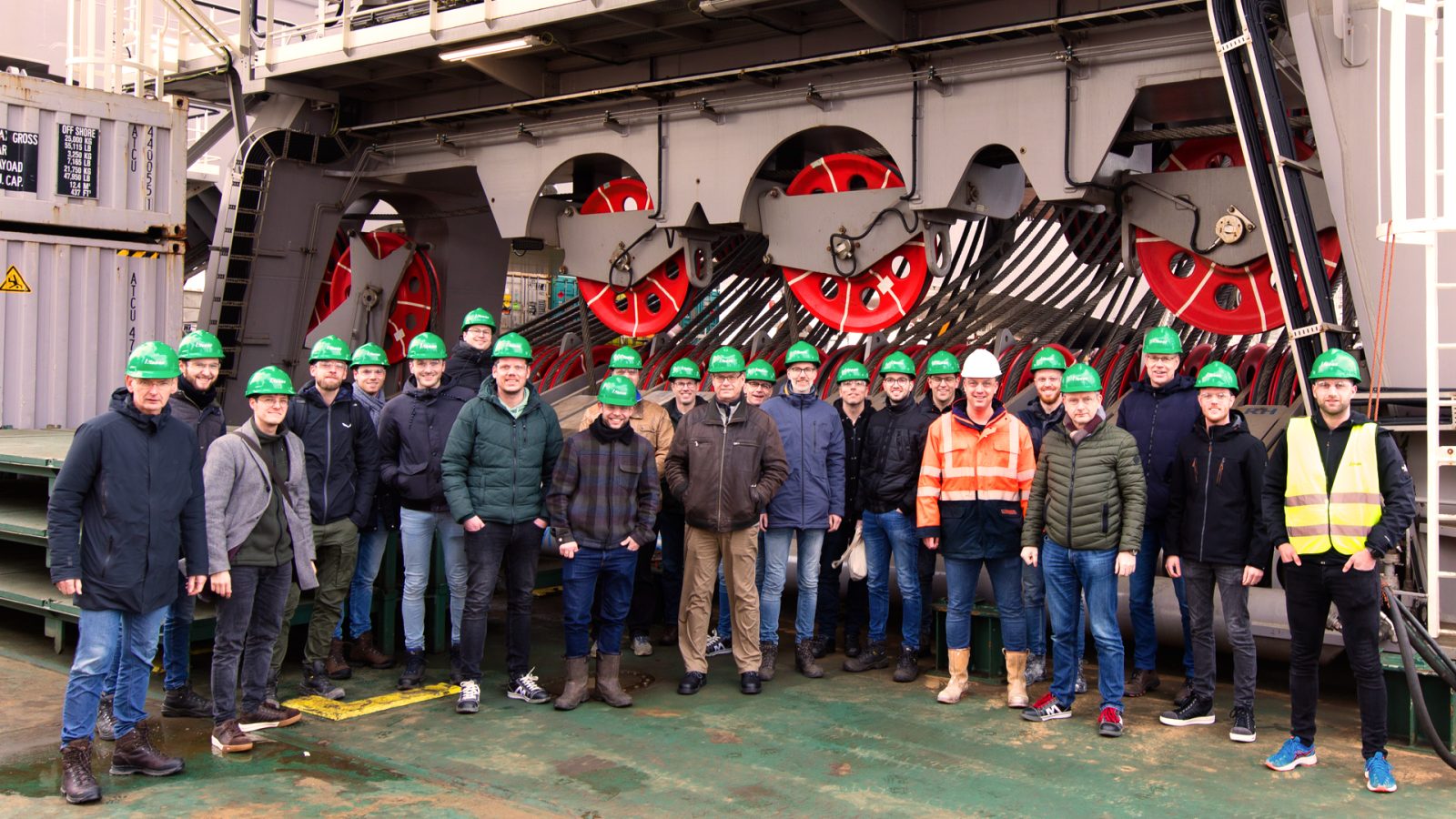
You do not learn manufacturability only from books or training courses. It mainly arises by exchanging knowledge with the people who are in the workshop every day. That is why MechDes actively seeks collaboration with fabricators, before, during, and after projects. A good example is the recent knowledge exchange day we organized together with Breman Machinery B.V. Our entire Special Equipment department was welcome in Genemuiden, where we got a look at their process and working method around the production of large steel structures.
This day provided valuable insights that we can apply directly in our designs. By better understanding how fabricators make choices and solve challenges in practice, we strengthen the connection between theory and execution. The result is not only a better design, but also closer collaboration in the chain, and that is exactly what manufacturability is about.
The added value of manufacturability
Continuously thinking about manufacturability makes us more complete as engineers. By anticipating challenges in production, assembly, and maintenance early on, we prevent expensive and time-consuming problems later in the process. The insight we gain by discussing with millers, welders, and assembly staff, and by following projects from start to finish, gives us a unique overview of the full chain.
At MechDes, we encourage engineers to keep looking critically at their designs and always keep the next step in the chain in mind. It is not only about drawing something that is technically correct, but about designs that can actually be produced in a workable, efficient, and sustainable way.
Engineering quality at MechDes
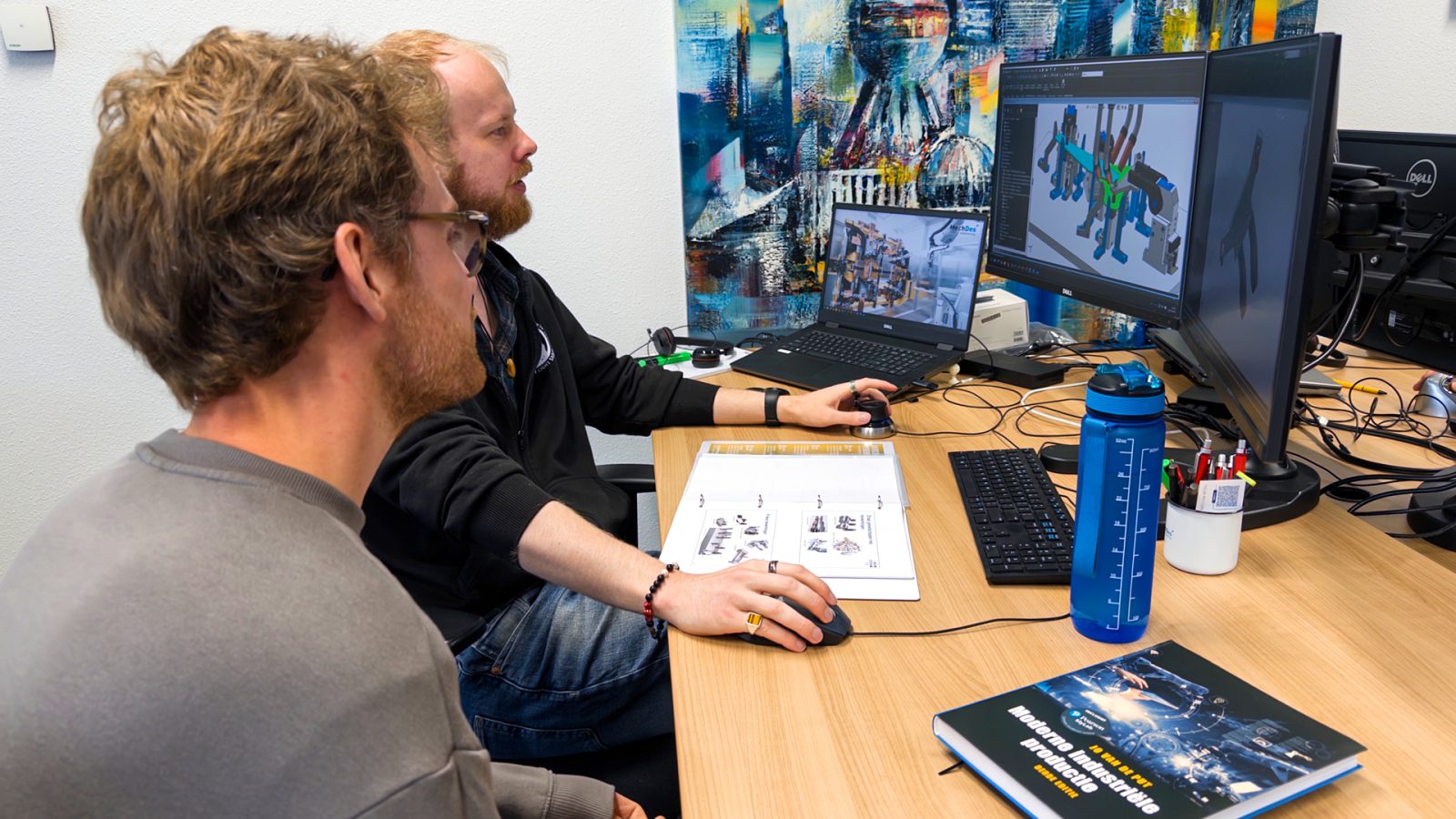
MechDes is a creative and distinctive mechanical engineering firm with more than 30 years of experience. We deliver high-quality engineering through partnerships, with involvement in all project phases. Our business units Special Equipment and Tooling & Machines focus respectively on complex, heavy structures and molds, tools, and machines.
Our core values — Innovative, Thorough, Involved, and Proud together — are reflected in every project. We work closely with our clients and production partners to realize designs that are technically perfect and practically manufacturable. At MechDes, we believe the best solutions arise when knowledge, experience, and creativity come together, with attention to every step in the chain.