
Introduction
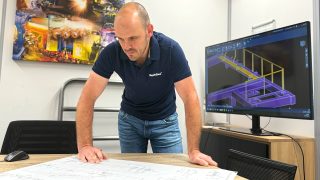
The question seems simple: why are we still producing 2D drawings for offshore projects at MechDes in 2025? The obvious answer is: because our clients ask for them. But as with many seemingly straightforward questions, reality is more nuanced.
For us, a client request is never taken at face value. We want to understand why the question is being asked and whether the underlying reason is logical and valuable. Only then do we align ourselves with it as a partner.
The context: complex offshore projects
To understand the discussion, some context is required. MechDes works on large-scale and complex offshore projects for leading clients such as Allseas, Van Oord, and Huisman. These projects involve mission equipment for applications such as deep sea mining, installation and decommissioning of wind turbines, oil platforms, and transformers. Examples include LEC cranes (Leg Encircling Cranes) and the massive lifting blocks of the Jacket Lift System on the Pioneering Spirit.
In projects of this physical scale, tolerances and interfaces are critical. Due to the enormous dimensions of these structures, even minor deviations can have major consequences: components that do not fit, stalled assembly, or unexpected failure costs. Quality assurance is therefore not a detail, but the backbone of the entire project.
This raises the question: is the traditional 2D drawing indispensable as final documentation, or would a transition to fully digital 3D models now be more logical?
The advantages of 3D: complete and transparent
Our international experience shows that 3D models offer significant advantages. They allow bottlenecks to be identified at an early stage and enable simulations, virtual assemblies, and even VR walkthroughs. Clients can see what they are getting early in the process, while engineers can process feedback more quickly.
However, reality remains complex. Global production and supply chains are still largely structured around 2D documentation. From welding departments in Asia to machining partners in Europe, the 2D drawing remains the universal communication medium. To guarantee consistent quality, pricing, and reproducibility worldwide, 2D documentation remains necessary for the time being.
Triple verification: the role of 2D in quality assurance
A frequently underestimated advantage of 2D drawings is the additional verification layer they provide. At MechDes, this process consists of three steps:
- 3D review – The digital model is assessed by the Lead Engineer.
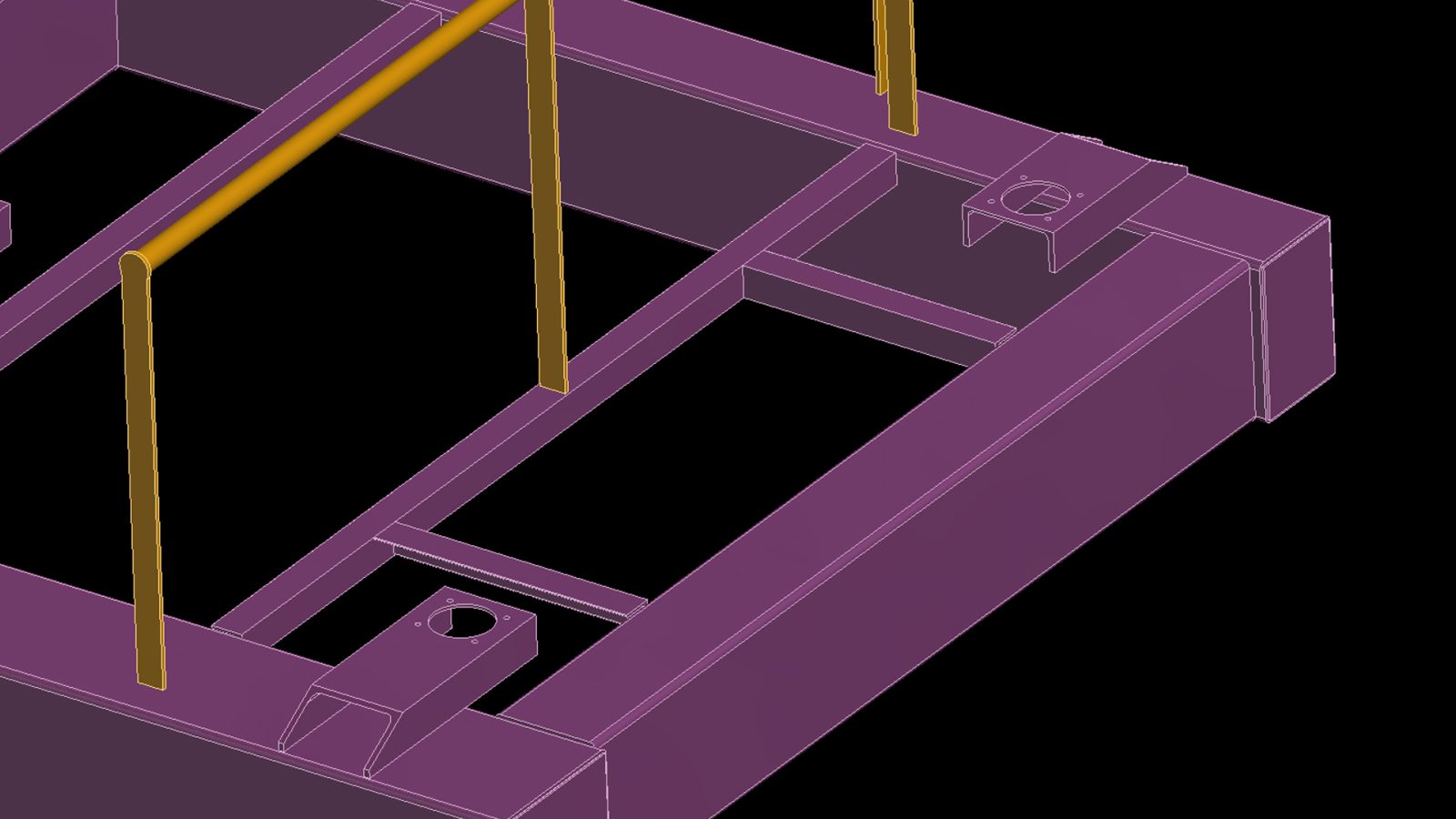
- Translation to 2D – The engineer critically evaluates the design before converting it into 2D drawings, carefully considering manufacturability and practical feasibility.
- Final review – The Lead Engineer reviews the drawings once more before production begins.
This triple check is more than a formality. It ensures that errors are identified early, that engineers continue to think critically, and that the final product aligns with real-world production and assembly practices. The 2D drawing is therefore not a relic of the past, but an essential instrument in our quality assurance and risk management.
The system remains 2D-oriented
Although the industry is gradually shifting toward 3D, today’s production ecosystem remains strongly 2D-oriented. Welders work with welding drawings, machinists use machining documentation, and for most stakeholders the drawing serves as the official contractual document. It defines clearly and unambiguously what will be delivered and how.
A complete transition to 3D would require not only a technological shift, but also a cultural one. Designers would need to adjust their working methods. In the current process, 3D models are often refined after the 2D drawings have already been produced. Moving to 3D-only would eliminate this additional verification step and, with it, an important layer of certainty.
Efficiency versus clarity
A common argument for 3D-only workflows is efficiency. In practice, however, this is not always the case. For a welder or metalworker, searching for a specific dimension within a complex 3D model can take more time than working from a clear and structured 2D drawing.
A drawing presents the relevant dimensions and relationships at a glance. This clarity reduces the risk of errors, accelerates execution, and makes the work more accessible.
Moreover, the drawing has formal value as a contractual document. In case of discussions or deviations, stakeholders can always refer back to the drawing, where specifications and notes are clearly defined. While 3D models can contain the same information, they often require additional knowledge and training to provide the same level of clarity and control.
Practical application: 3D in collaboration with 2D
In multiple projects, we have found that the combination of 2D and 3D delivers the strongest results.
During the development of a basic design, a 3D model is often reviewed together with the client, work planners, and production supervisors. In these sessions, design adjustments can be made immediately to improve manufacturability without compromising quality. For example, repositioning a split line, adding a lifting eye, or optimizing accessibility for maintenance.
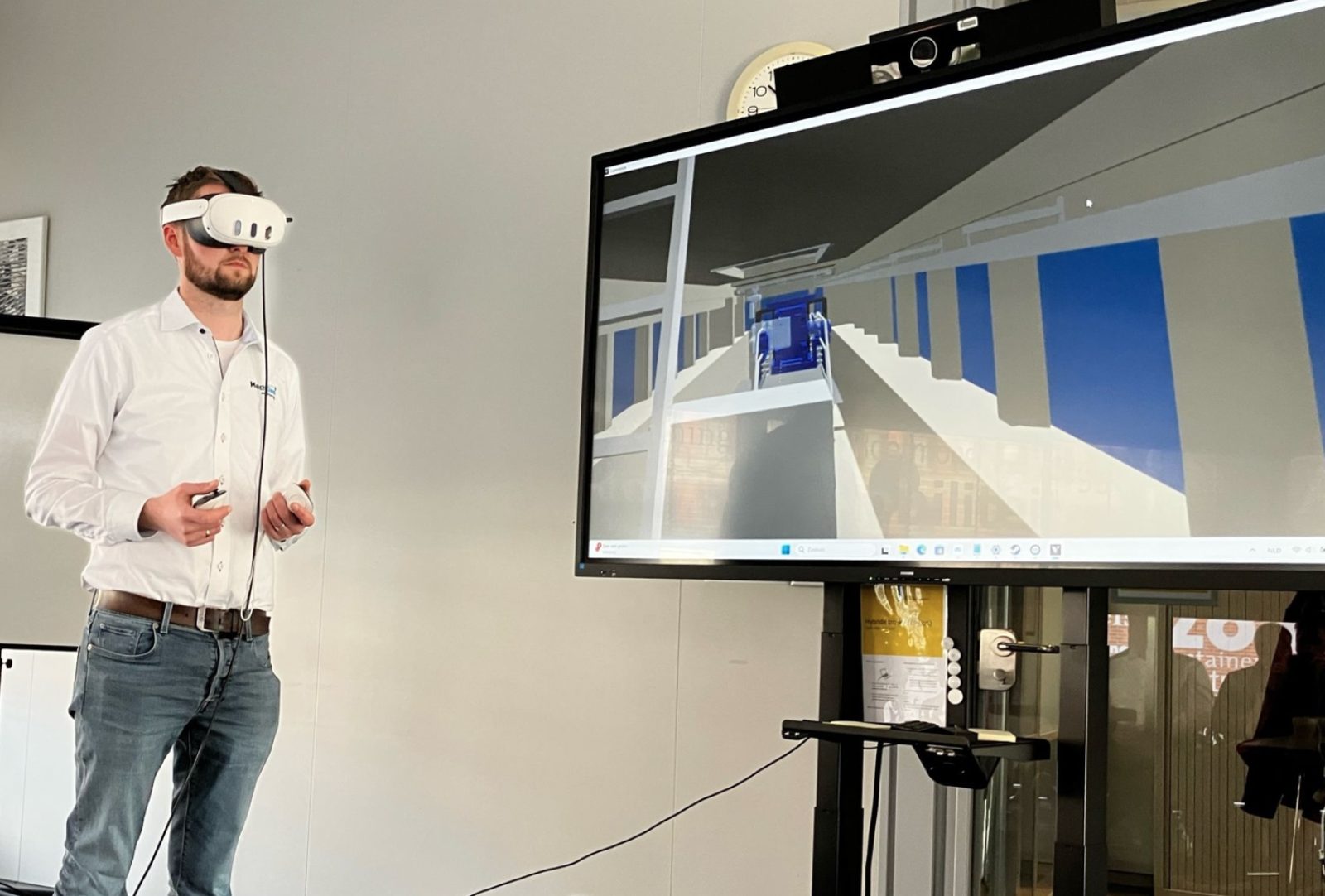
We also use 3D models to conduct VR walkthroughs. This provides end users with a realistic impression of the product and opens the door to valuable feedback. An operator may suggest relocating a control panel or adding an additional platform. Such input improves usability and safety.
These practical examples show that the hybrid approach is not a compromise, but a reinforcement of both design and production.
Hybrid as the logical intermediate step
We do not see the near future as a black-and-white choice between 2D and 3D, but as a hybrid approach in which both complement each other, with the role of 3D steadily increasing.
3D models offer unprecedented possibilities for simulation and digital information exchange. At the same time, 2D drawings retain their value as a communication tool, quality check, and contractual document.
A potential intermediate step is working with PMI (Product Manufacturing Information). In this approach, tolerances, surface finishes, and other manufacturing information such as item numbers are embedded directly within the 3D model. From these enriched models, 2D drawings can be generated automatically. This preserves the double verification layer while increasing efficiency and ensuring transparency and traceability.
The final step: toward a 3D-only future
By gaining experience today with 3D models enriched with PMI, both designers and manufacturers are preparing for a future in which 2D may become redundant.
Manufacturers are increasingly able to work directly with 3D data, and the more familiar they become with PMI, the faster the transition to 3D-only workflows can occur. However, this transition must be carefully managed. Abandoning 2D too quickly would introduce risks and misunderstandings within the supply chain.
Vision for the offshore industry
Digitalization is not a goal in itself. Offshore projects revolve around certainty, safety, and risk management. The strength lies in controlled, step-by-step change.
Conclusion
Whether we will still be producing 2D drawings at MechDes five years from now cannot be answered definitively. It depends on the pace of technological development and on how quickly the international production chain can absorb these changes.
What we do know with certainty is this: as soon as there is an opportunity to save time and cost for our clients without compromising quality, we will seize it. Until then, 2D and 3D will continue to coexist. Not out of habit, but out of conviction.
Whether it concerns the lifting blocks of the Pioneering Spirit or mission equipment for deep sea mining, one question always remains central at MechDes: how do we deliver maximum certainty and value for our clients? As long as 2D plays an essential role in that mission, it remains part of our profession.